

Nephrology flashcards
237 cards · 7 topics · 3% of the board exam
237 free Nephrology flashcards for pediatric board review and rotations, written in our own words with public guideline sources. Topics: Acute Kidney Injury & Toxins, CKD Cystic & Stones, Fluids & Electrolytes, Hematuria & Glomerulonephritis and 3 more. Nephrology is 3% of the board exam.
Sample Nephrology cards
-
Acute Kidney Injury & Toxins
AKI despite medical therapy → urgent dialysis indications? […]
Show answer
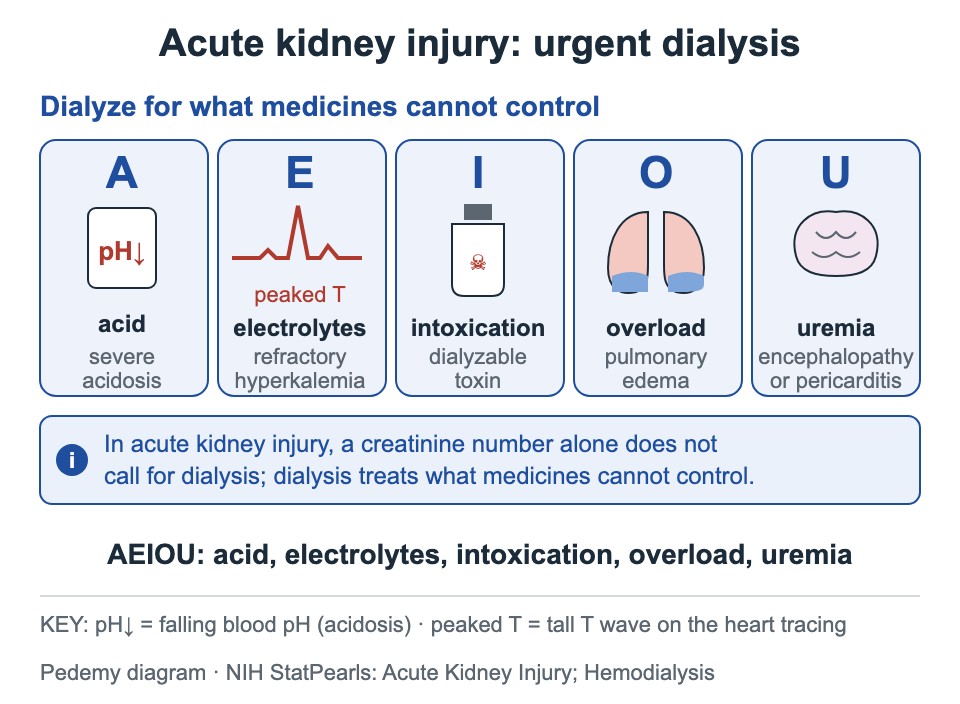
AKI despite medical therapy → urgent dialysis indications? refractory hyperkalemia, acidosis, overload, uremia, toxin
Why: Dialysis is for problems medicines cannot control: potassium, severe acidosis, volume overload with pulmonary edema, uremic encephalopathy or pericarditis, and dialyzable toxins. A creatinine number alone is not an indication for dialysis. Hook: AEIOU — acid, electrolytes, intoxication, overload, uremia.
Source: StatPearls (NCBI Bookshelf): Hemodialysis (updated 2026); Palevsky PM et al. KDOQI US Commentary on the 2012 KDIGO Clinical Practice Guideline for Acute Kidney Injury (Am J Kidney Dis 2013;61:649-672). Rewritten for Pedemy in our own words, November 2026.
Acute kidney injury: when is it AKI? -
CKD Cystic & Stones
ARPKD → kidney cysts arise from which segment? […]
Show answer
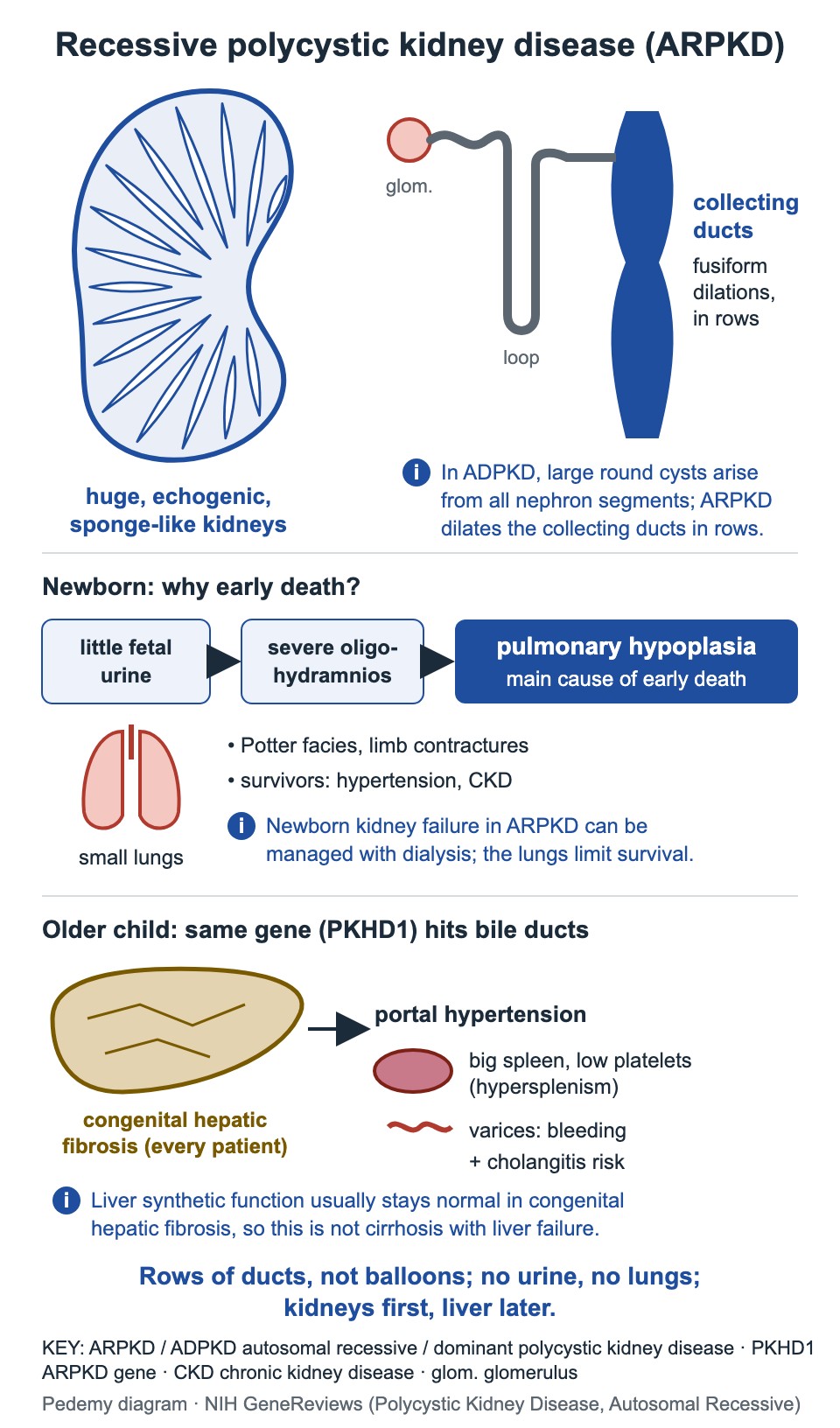
ARPKD → kidney cysts arise from which segment? collecting ducts (fusiform dilations)
Why: In ARPKD, collecting ducts dilate into small radial cysts, giving huge, echogenic, sponge-like kidneys. The same gene (PKHD1) affects bile ducts, causing congenital hepatic fibrosis. Large round cysts from all nephron segments are the pattern of ADPKD instead. Hook: recessive — rows of ducts, not balloons.
Source: GeneReviews (NIH NCBI Bookshelf): Autosomal Recessive Polycystic Kidney Disease - PKHD1 (updated 2024); StatPearls (NCBI Bookshelf): Autosomal Recessive Polycystic Kidney Disease (updated 2026). Rewritten for Pedemy in our own words, November 2026.
ARPKD -
Fluids & Electrolytes
Central DI (AVP deficiency) newly confirmed in a child → next study? […]
Show answer
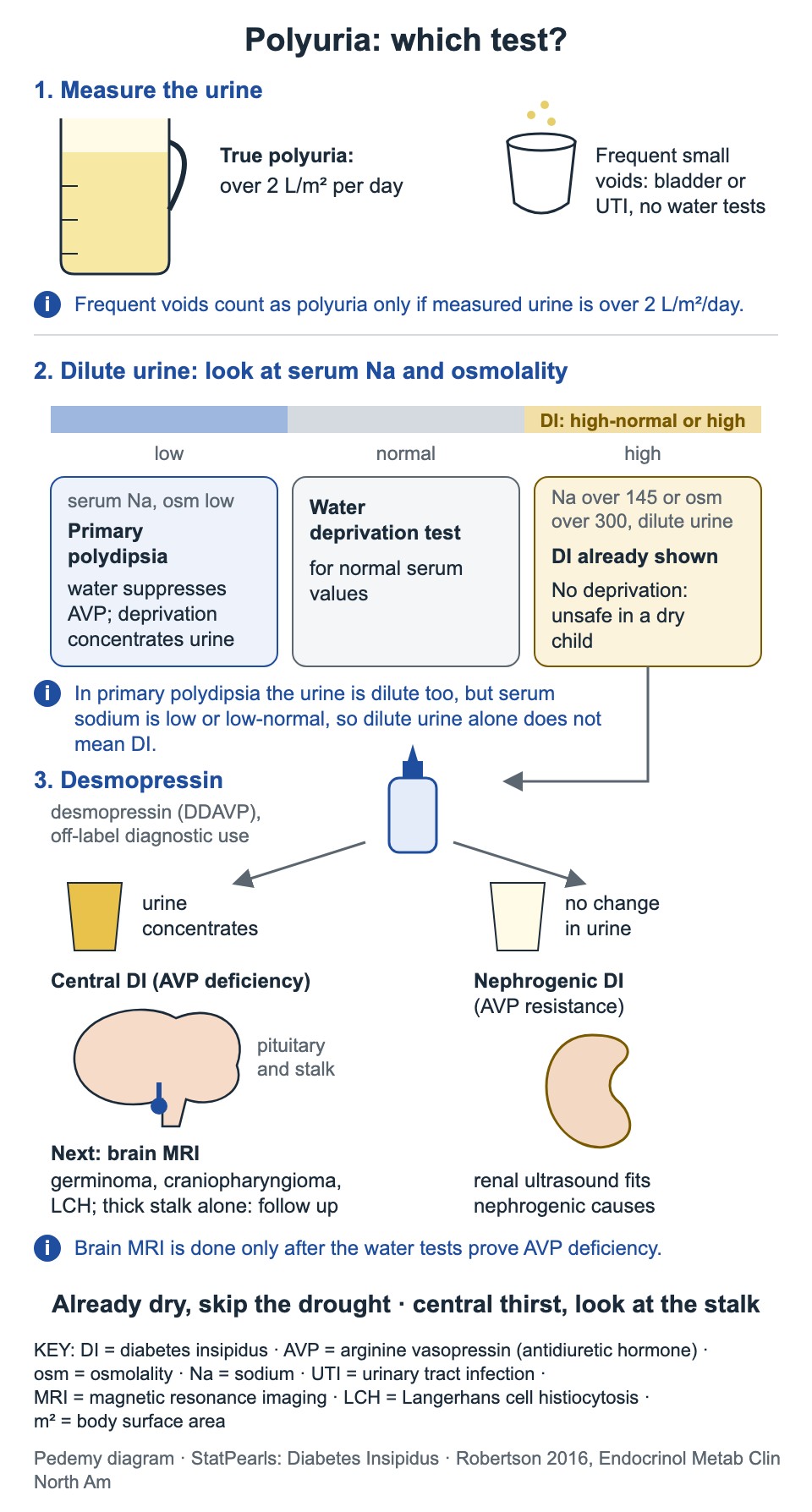
Central DI (AVP deficiency) newly confirmed in a child → next study? Brain MRI of the pituitary and stalk
Why: Central DI in children often signals a lesion: germinoma, craniopharyngioma, Langerhans cell histiocytosis; a thick stalk is not diagnostic alone and needs specialist follow-up. Image only after the water tests prove AVP deficiency. Renal ultrasound fits nephrogenic causes, not central DI. Hook: central thirst, look at the stalk.
Source: Robertson GL. Diabetes insipidus: differential diagnosis and management (Best Pract Res Clin Endocrinol Metab 2016); Atila C et al., arginine vasopressin deficiency and resistance: diagnosis (J Clin Endocrinol Metab 2026). Rewritten for Pedemy in our own words, November 2026.
Polyuria: which test? -
Hematuria & Glomerulonephritis
Nail-patella syndrome (dystrophic nails, absent patellae) → kidney screening test? […]
Show answer
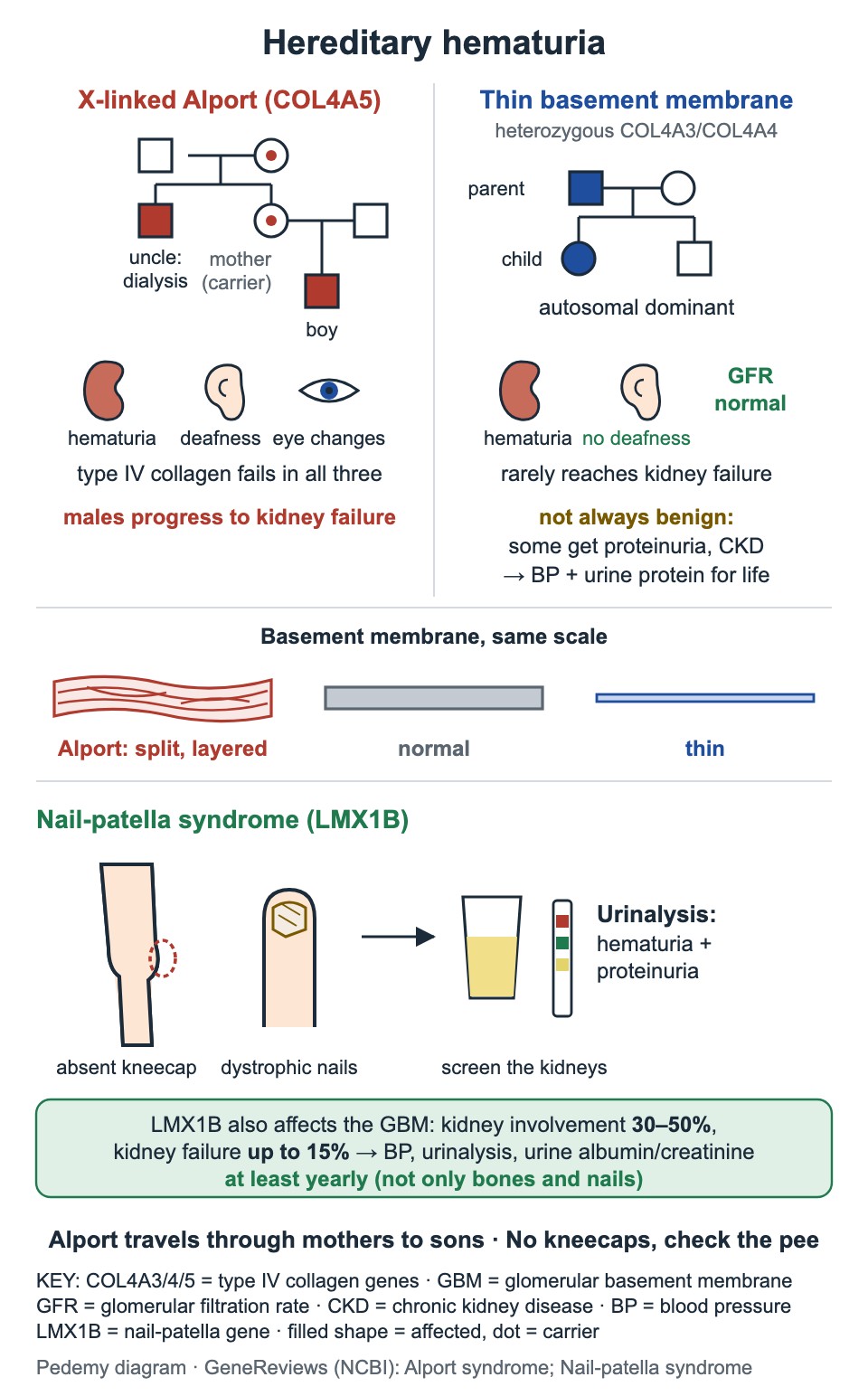
Nail-patella syndrome (dystrophic nails, absent patellae) → kidney screening test? Urinalysis for hematuria and proteinuria
Why: LMX1B variants also affect the GBM: kidney involvement in 30–50%, kidney failure in up to 15%, so check BP, urinalysis and urine albumin/creatinine at least yearly. Nail-patella syndrome needs kidney screening, not only bone and nail care. Hook: No kneecaps, check the pee.
Source: GeneReviews (NCBI Bookshelf): Nail-Patella Syndrome. Rewritten for Pedemy in our own words, November 2026.
Hereditary hematuria -
Hypertension
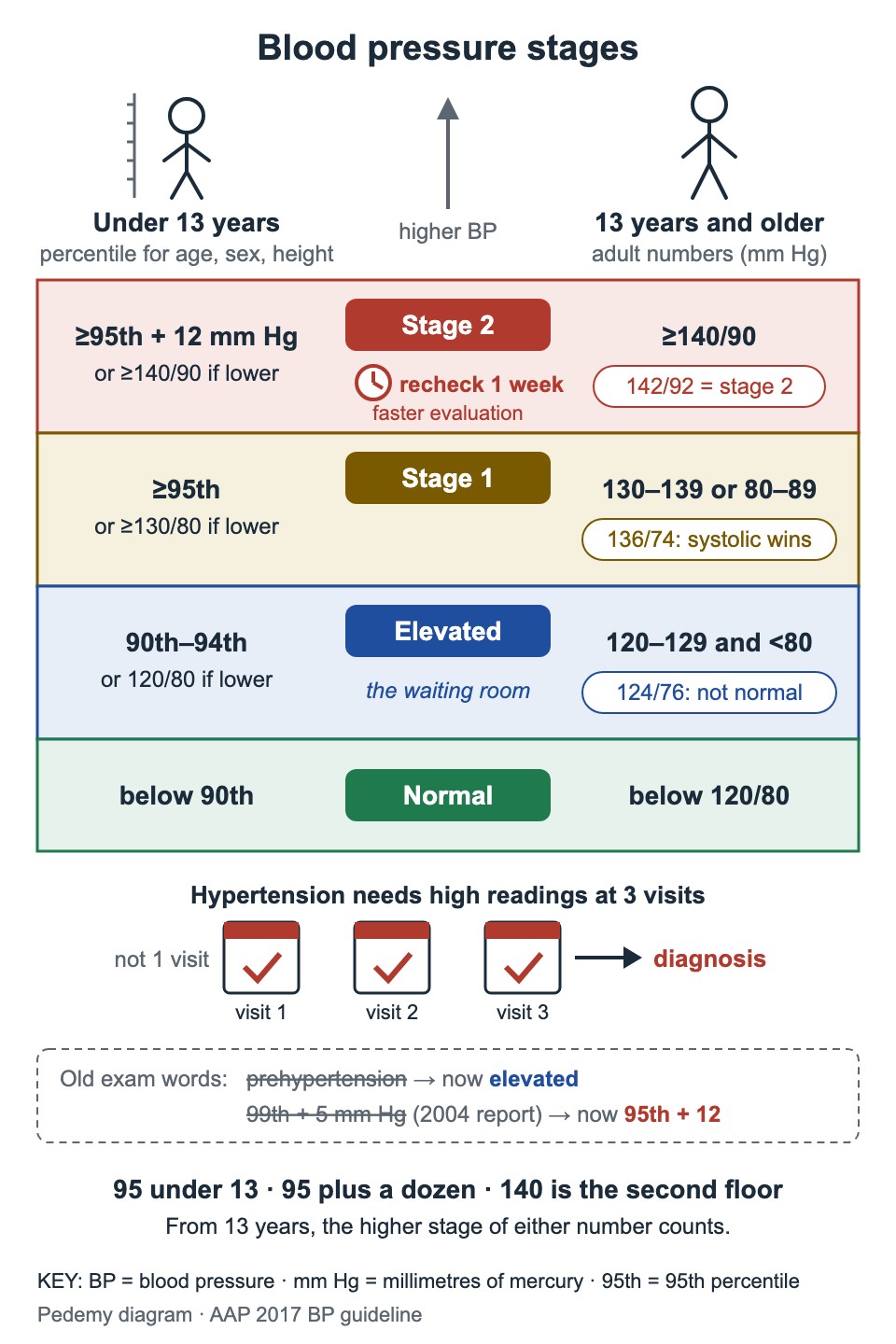
Child under 13 years, BP at least 12 mm Hg above the 95th percentile (or ≥140/90 if lower) → stage? […]
Show answer
Child under 13 years, BP at least 12 mm Hg above the 95th percentile (or ≥140/90 if lower) → stage? Stage 2 hypertension
Why: Stage 2 under 13 is the 95th percentile plus 12 mm Hg, or 140/90 if that is lower. It shortens the repeat interval to 1 week. The 2004 report instead used the 99th percentile plus 5 mm Hg. Hook: 95 plus a dozen.
Source: AAP Clinical Practice Guideline for Screening and Management of High Blood Pressure in Children and Adolescents (Pediatrics 2017). Rewritten for Pedemy in our own words, November 2026.
Blood pressure stages -
Proteinuria & Nephrotic Syndrome
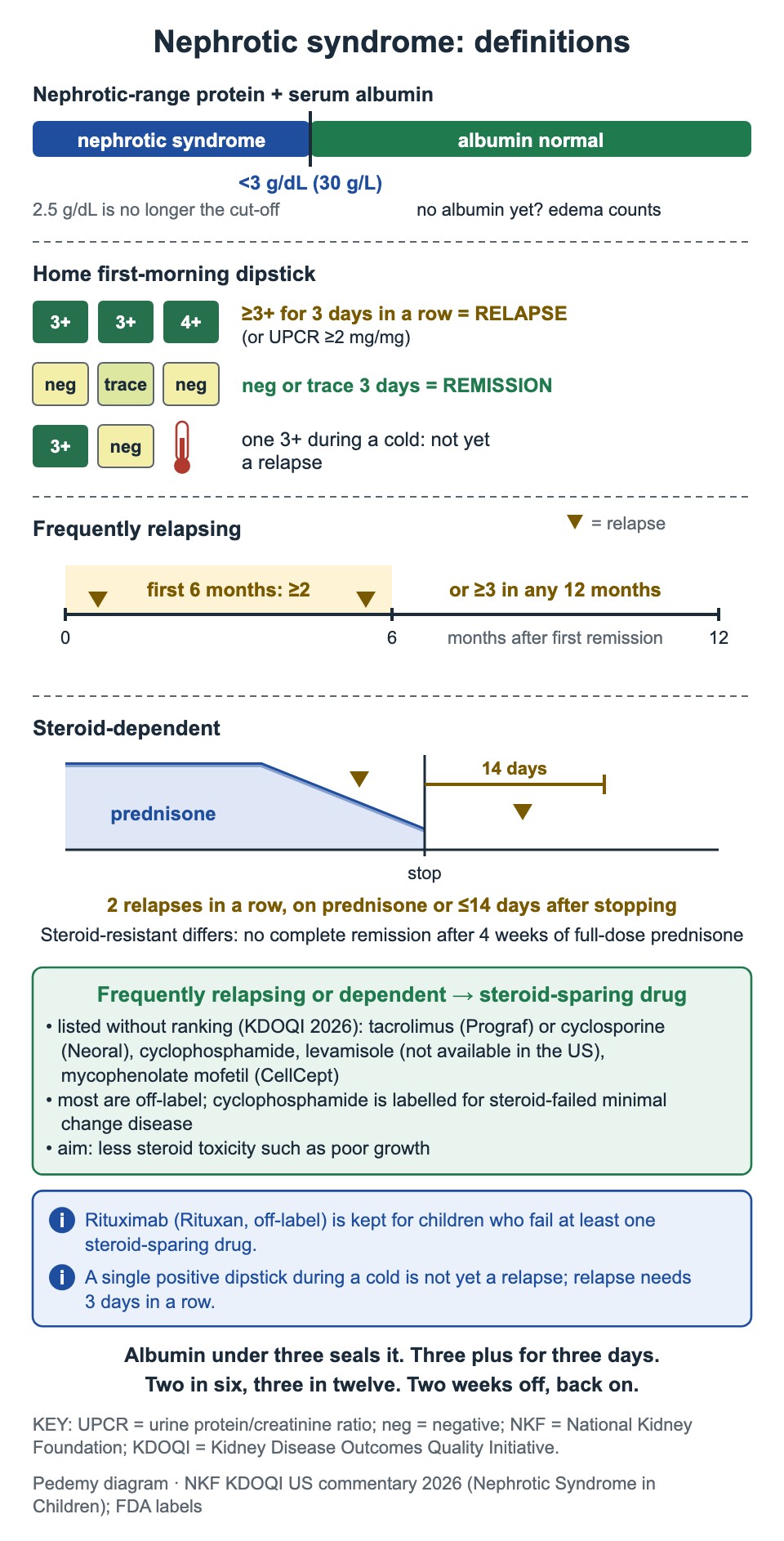
≥2 relapses within 6 months of first remission, or ≥3 in any 12 months → term? […]
Show answer
≥2 relapses within 6 months of first remission, or ≥3 in any 12 months → term? Frequently relapsing nephrotic syndrome
Why: Frequent relapses mean heavy cumulative steroid exposure, which is the trigger to start a steroid-sparing drug. Relapses during taper or within 14 days of stopping define steroid dependence instead. Hook: Two in six, three in twelve.
Source: Wang CS, Gbadegesin R et al. KDOQI US Commentary on the KDIGO 2025 Clinical Practice Guideline for the Management of Nephrotic Syndrome in Children (Am J Kidney Dis 2026;87:141-152). Rewritten for Pedemy in our own words, November 2026.
Nephrotic syndrome: definitions -
Tubular Disorders & Acid Base
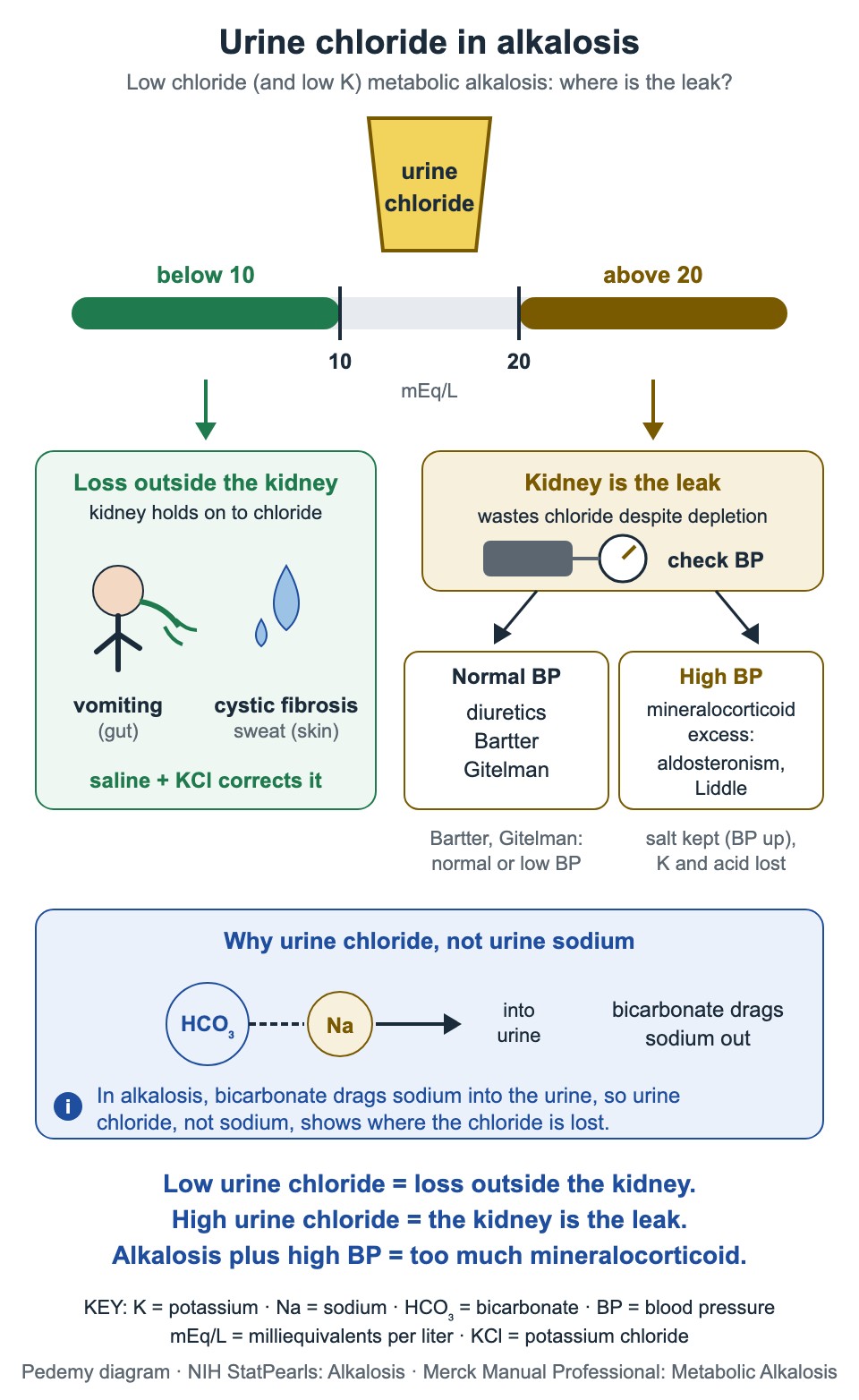
Purging teen, alkalosis lasts after vomiting stops → what keeps bicarbonate high? […]
Show answer
Purging teen, alkalosis lasts after vomiting stops → what keeps bicarbonate high? Chloride depletion (with low K)
Why: Without chloride, the collecting duct (pendrin) cannot excrete bicarbonate, and low K and high aldosterone add to it; giving chloride corrects it even before volume is restored. The volume-only explanation, 'contraction alkalosis', is incomplete. Hook: no chloride, no bicarbonate exit.
Source: StatPearls: Alkalosis (NCBI Bookshelf); MSD Manual Professional: Metabolic Alkalosis; Luke RG, Galla JH. It is chloride depletion alkalosis, not contraction alkalosis (J Am Soc Nephrol 2012). Rewritten for Pedemy in our own words, November 2026.
Urine chloride in alkalosis -
Acute Kidney Injury & Toxins
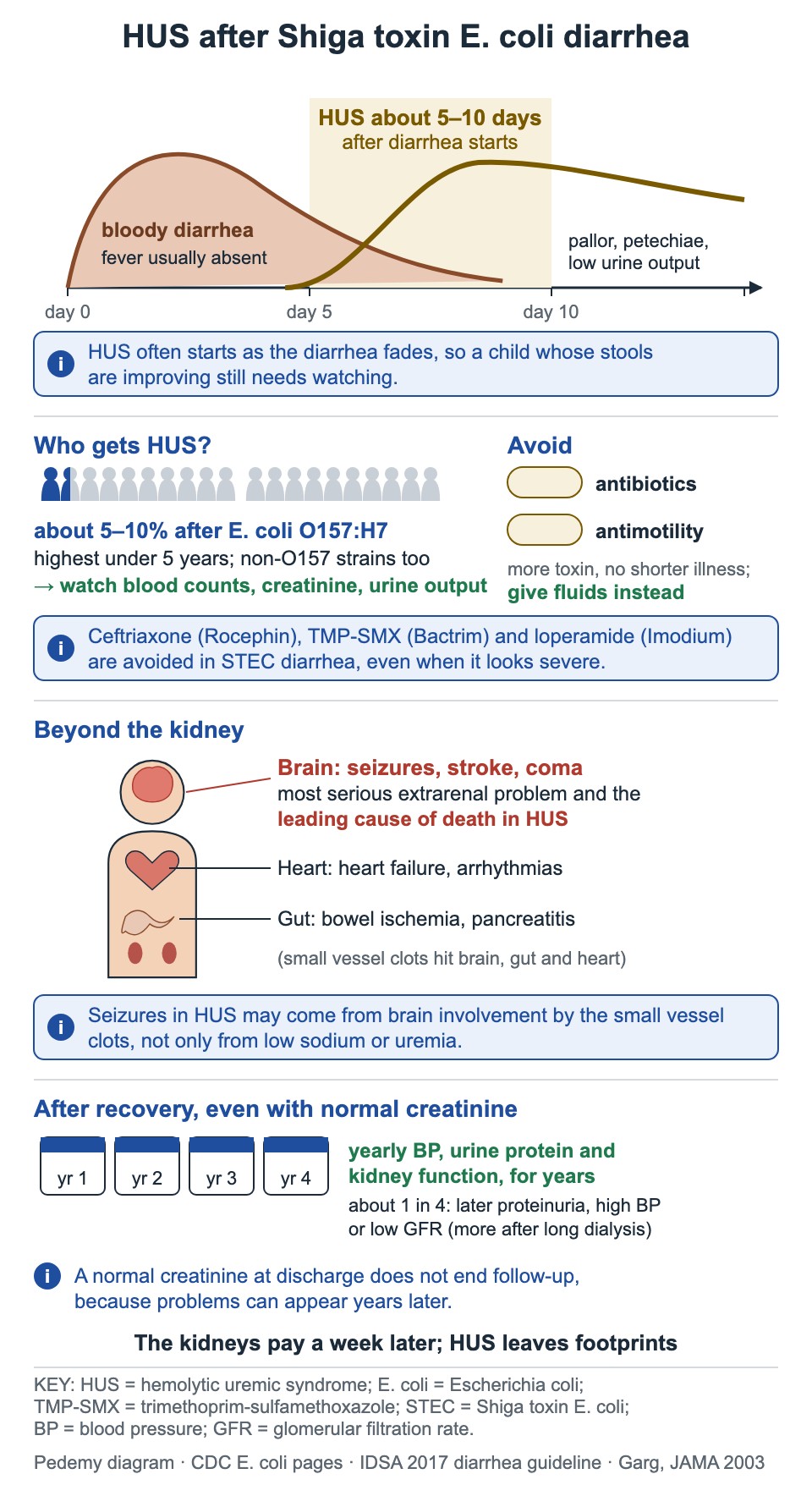
Child with confirmed E. coli O157:H7 diarrhea → chance of going on to HUS? […]
Show answer
Child with confirmed E. coli O157:H7 diarrhea → chance of going on to HUS? About 5–10% (highest under 5 years)
Why: Most STEC infections settle, but roughly 1 in 10–20 children, mainly under 5, develop HUS, so blood counts, creatinine and urine output are watched. HUS follows a minority of infections, yet is common enough to monitor for. Hook: about one in ten or fewer, mostly the little ones.
Source: CDC: E. coli Questions and Answers; CDC MMWR Recomm Rep 2009;58(RR-12). Rewritten for Pedemy in our own words, November 2026.
HUS after Shiga toxin E. coli diarrhea
Topics in Nephrology
- Acute Kidney Injury & Toxins23
- CKD Cystic & Stones24
- Fluids & Electrolytes21
- Hematuria & Glomerulonephritis31
- Hypertension46
- Proteinuria & Nephrotic Syndrome40
- Tubular Disorders & Acid Base51
Nephrology study guides
- Acute kidney injury and nephrotoxins in children
- Chronic kidney disease, cystic kidneys and stones in children
- Fluids and electrolytes in children
- Hematuria and glomerulonephritis in children
- High blood pressure in children and adolescents
- Proteinuria and nephrotic syndrome in children
- Tubular disorders and acid–base in children
Clinical tools for Nephrology
Sample cards in other subjects
- Growth & Development
- Immunizations & Post-exposure Prevention
- Nutrition
- Well-Child Care & Prevention
- Emergency Medicine
- Infectious Disease
- ENT
- Mental Health
- Ophthalmology
- Adolescent Medicine
- Cardiology
- Gastroenterology
- Pulmonology
- Dermatology
- Musculoskeletal & Sports Medicine
- Neonatology
- Neurology
- Allergy & Immunology
- Behavioral
- Endocrinology
- Hematology
- Oncology
- Urology
- Biostatistics & Epidemiology
- Genetics
- Medical Ethics
- Metabolic Disorders
- Patient Safety & Quality Improvement
- Rheumatology
- Pharmacology
Free to study without an account. Sign up free to save your spaced-repetition schedule across devices. For education only; check current guidelines before clinical use.