

Key points
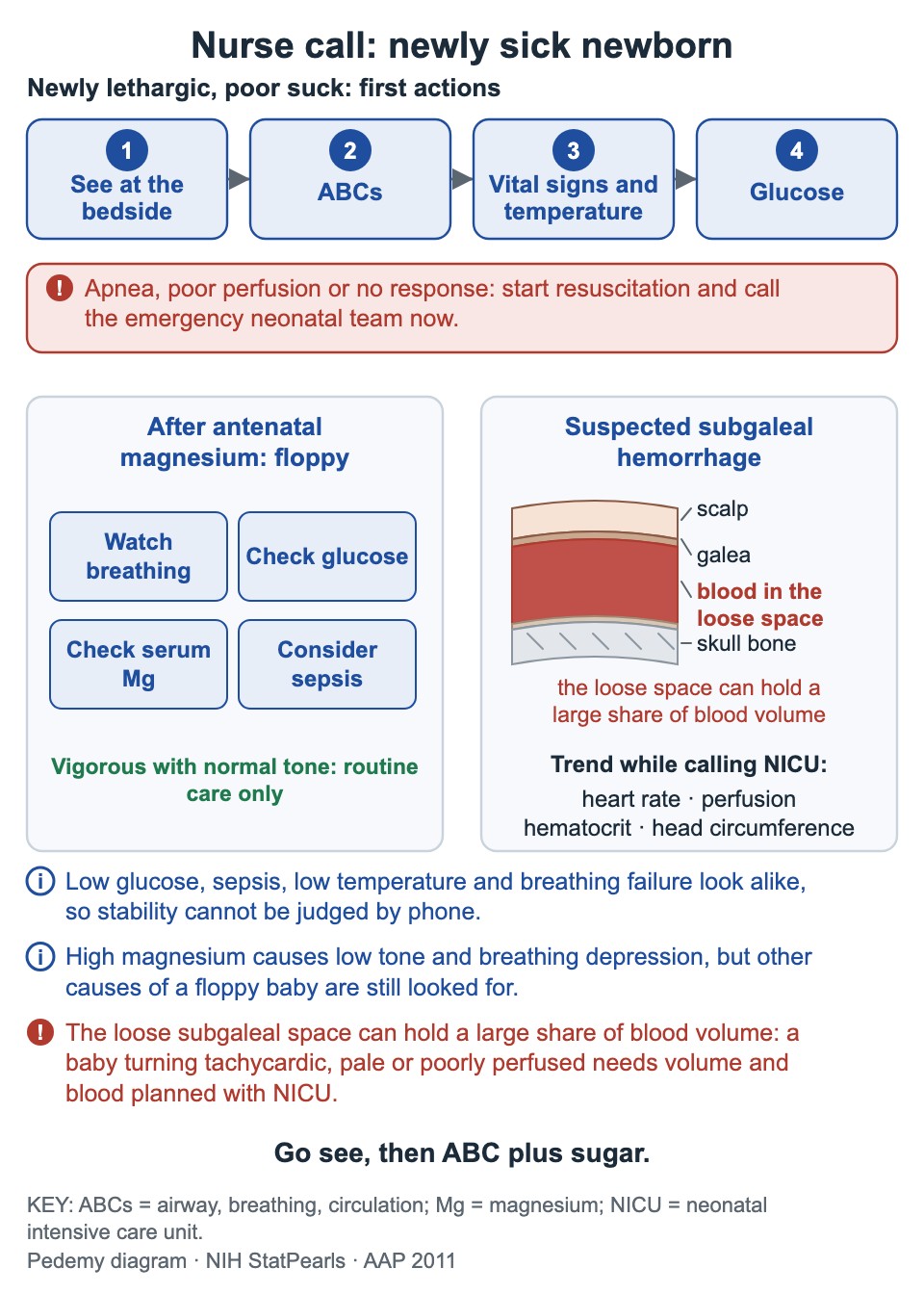
Nurse call: newly sick newborn
From Pedemy's flashcards. Tap to open full size; explained in “Urgent calls and resuscitation at birth” below.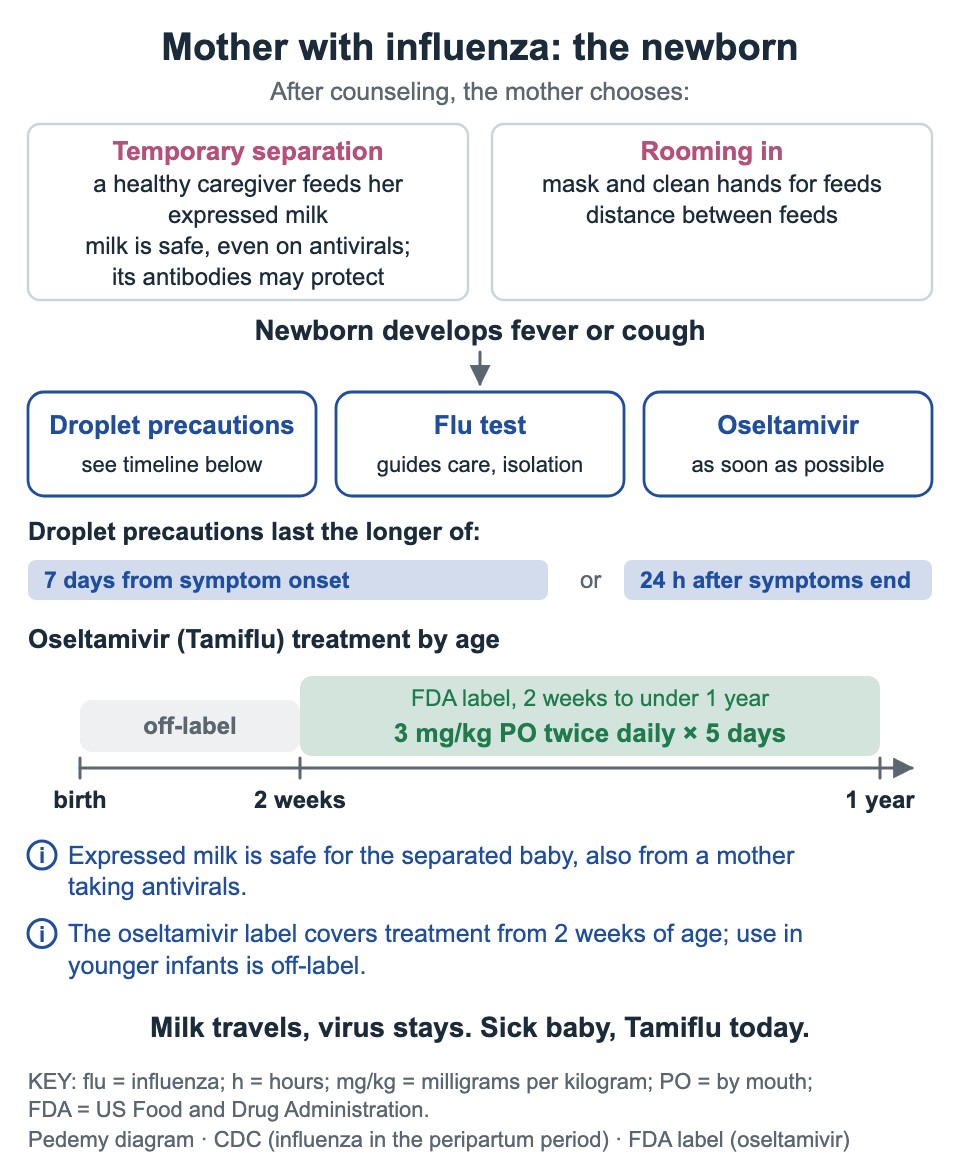
A newly lethargic or poorly sucking newborn is seen at the bedside: ABCs, vital signs, temperature and glucose.
Glucose screening is for late preterm, SGA, LGA and infants of diabetic mothers: feed by 1 hour, first check 30 minutes after that feed.
IV glucose for neonatal hypoglycemia D10W 2 mL/kg (200 mg/kg), then an infusion of 5–8 mg/kg/min.
Every newborn of 35 weeks or more gets a TcB or TSB at 24–48 hours; jaundice before 24 hours is measured as soon as possible.
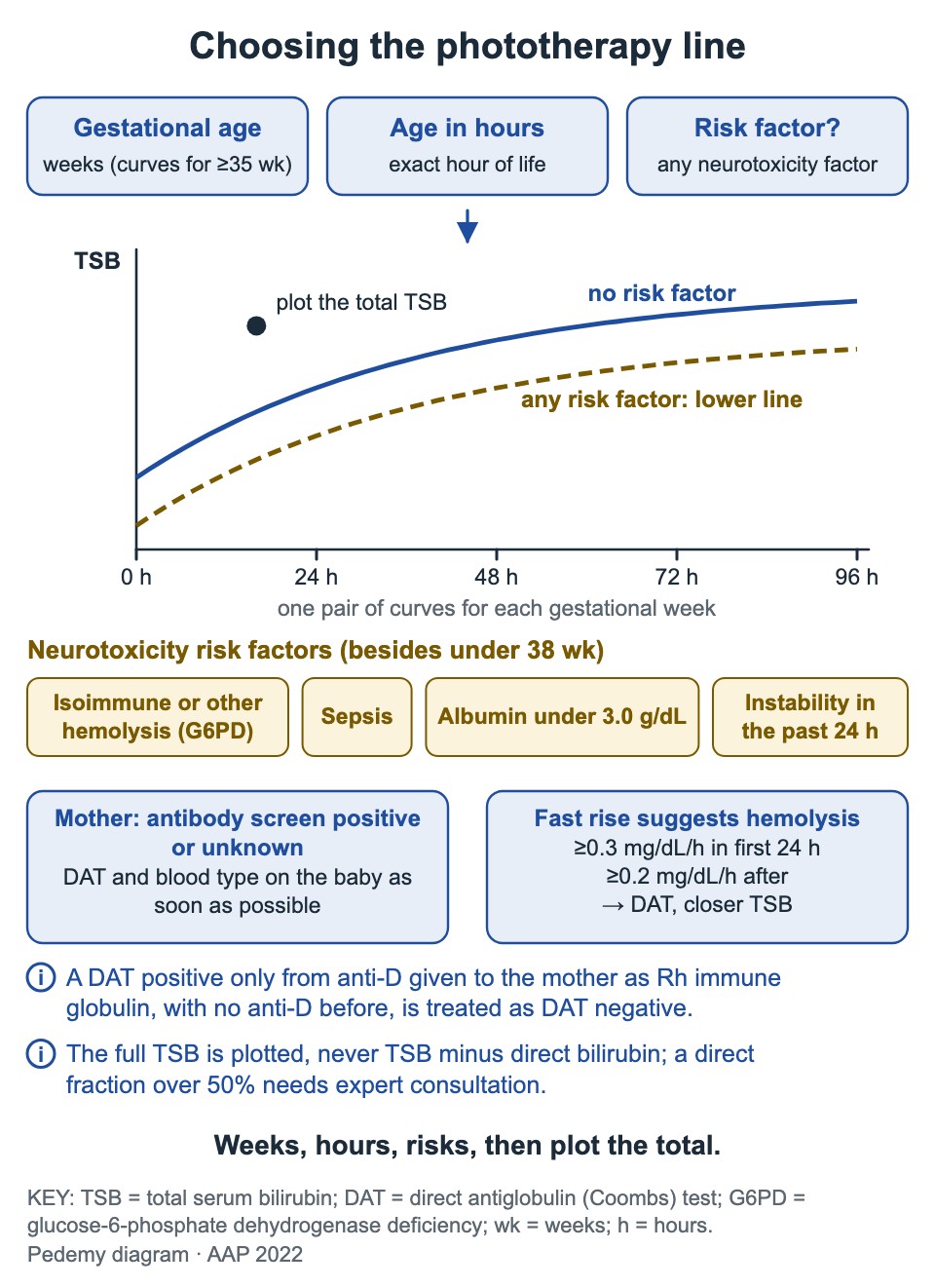
Phototherapy lines (AAP 2022) use gestational age, age in hours and neurotoxicity risk factors; stop when TSB is at least 2 mg/dL below the starting line.
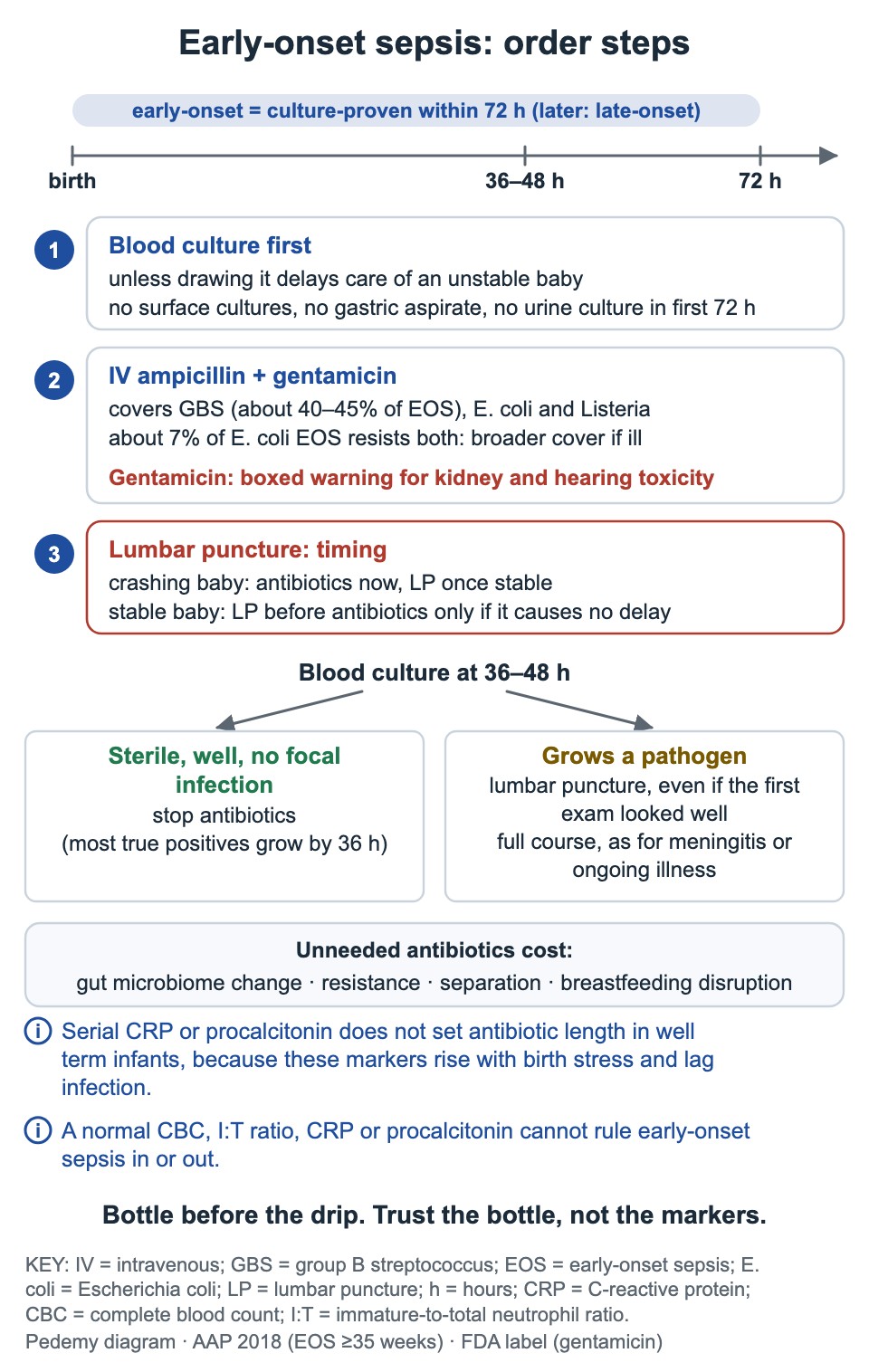
Empiric early-onset sepsis antibiotics are IV ampicillin + gentamicin; stop at 36–48 hours if the blood culture is sterile and the baby is well.
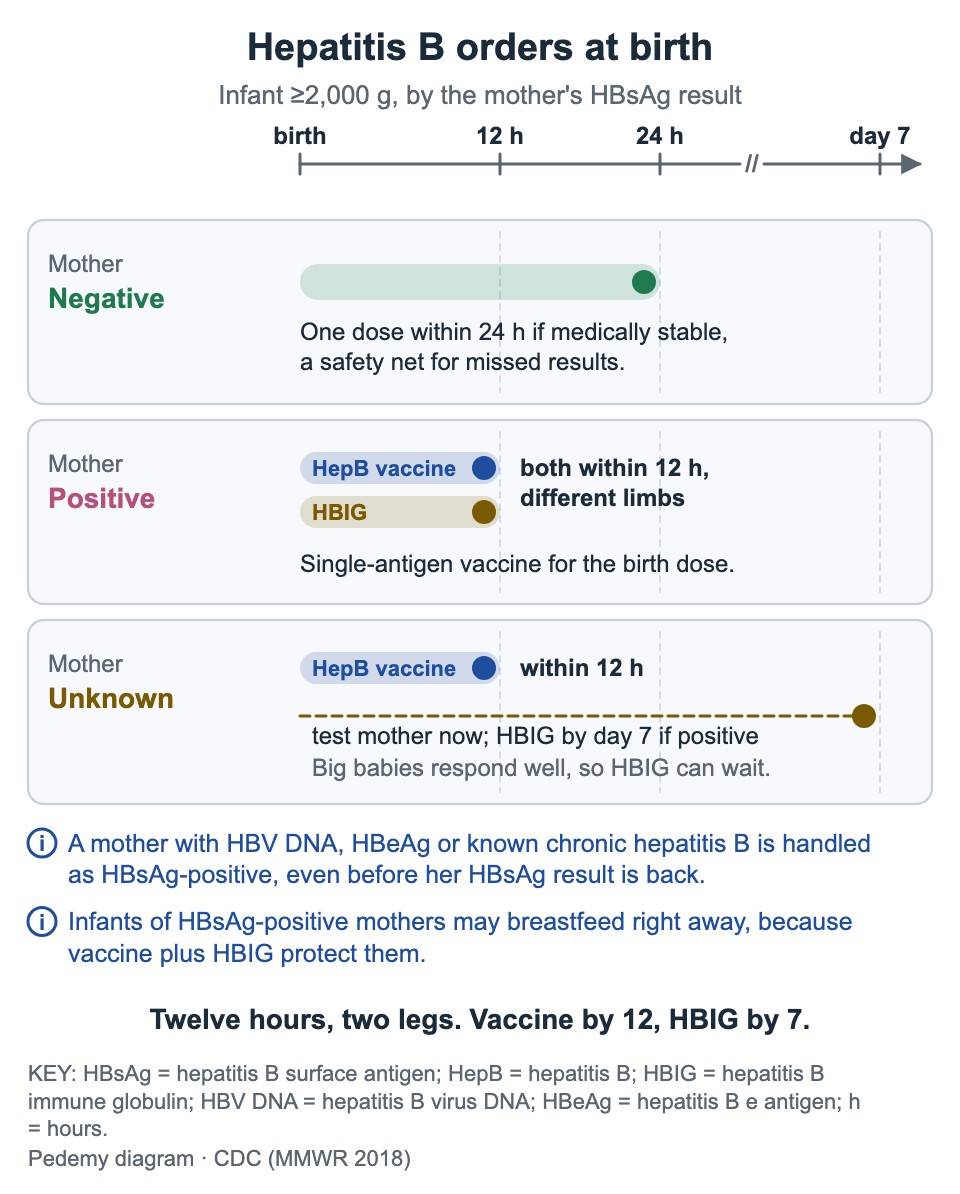
Hepatitis B vaccine within 24 hours for a stable baby of 2000 g or more; vaccine + HBIG within 12 hours if the mother is HBsAg-positive.
CCHD screen at 24 hours or more on the right hand and a foot: pass is 95% or more at both sites with a gap of 3 points or less.
Urgent calls and resuscitation at birth
A nurse call about a newborn who is newly lethargic or sucking poorly means going to the bedside. Low glucose, sepsis, low temperature and breathing failure look alike, and stability cannot be judged by phone: check airway, breathing, circulation, vital signs, temperature and glucose. Apnea, poor perfusion or no response means resuscitation and the emergency neonatal team at once.
- After antenatal magnesium, a floppy newborn who feeds weakly has breathing watched, glucose and serum magnesium checked, and sepsis considered. High magnesium lowers tone and depresses breathing, but other causes of a floppy baby are still excluded. A vigorous newborn with normal tone needs only routine care.
- Suspected subgaleal hemorrhage: trend heart rate, perfusion, hematocrit and head circumference while calling the NICU. The loose subgaleal space can hold a large share of the blood volume, so shock can develop within hours. A baby who turns tachycardic, pale or poorly perfused needs volume and blood replacement planned with the NICU team.
- Born before 35 weeks: Level II (special care) nursery or higher. Level I well-newborn nurseries care for stable babies of 35 weeks or more; a stable late preterm baby of 35–36 weeks may stay with late-preterm monitoring.
- Still needing breathing support after transition observation: NICU admission for evaluation, since ongoing distress suggests disease such as TTN, pneumonia, sepsis or heart disease. A baby whose signs fully resolve during observation returns to the mother with routine monitoring.
- Term newborn with severe acidemia on cord gas and an abnormal neurologic examination: call the NICU for cooling evaluation. Therapeutic hypothermia reduces death and disability in moderate to severe HIE only when started within 6 hours of birth. Acidemia with a normal neurologic examination means close observation; cooling criteria are not met.
- Green (bilious) vomiting: NPO, gastric decompression, urgent surgery consult and an upper GI study. It is malrotation with volvulus until proven otherwise, and delay can cost the bowel. Small non-bilious spit-ups in a thriving baby are usually physiologic reflux.
- No meconium with a distended abdomen or vomiting suggests bowel obstruction (Hirschsprung disease, meconium ileus or atresia): NPO, abdominal X-ray, surgery consult. A well baby under 48 hours old with a soft abdomen who feeds well may be observed.
- No void on the first day: assess intake, hydration, the bladder by palpation and the prenatal kidney imaging (low intake, a missed diaper, outlet obstruction or a kidney anomaly). A distended bladder or abnormal prenatal kidneys calls for an urgent renal ultrasound and urology input.
- Not breathing by 60 seconds, or heart rate under 100 after the initial steps: positive-pressure ventilation. Ventilation is the most important step of newborn resuscitation, and heart rate is the main sign it works. The pulse oximeter goes on the right hand or wrist (preductal).
- Heart rate under 60 despite ventilation that moves the chest: chest compressions at 3:1 with breaths (90 compressions and 30 breaths each minute), started only after ventilation corrective steps, ideally through an endotracheal tube or laryngeal mask.
- Heart rate still under 60 after compressions: IV or umbilical venous epinephrine 0.01–0.03 mg/kg, then a saline flush. Endotracheal epinephrine 0.05–0.1 mg/kg is given only while IV or umbilical access is being placed, because absorption by tube is unreliable.
- Keep body temperature at 36.5–37.5 °C with drying, skin-to-skin contact and warmth started at once. Deferred cord clamping for at least 60 seconds is advised for most vigorous newborns.
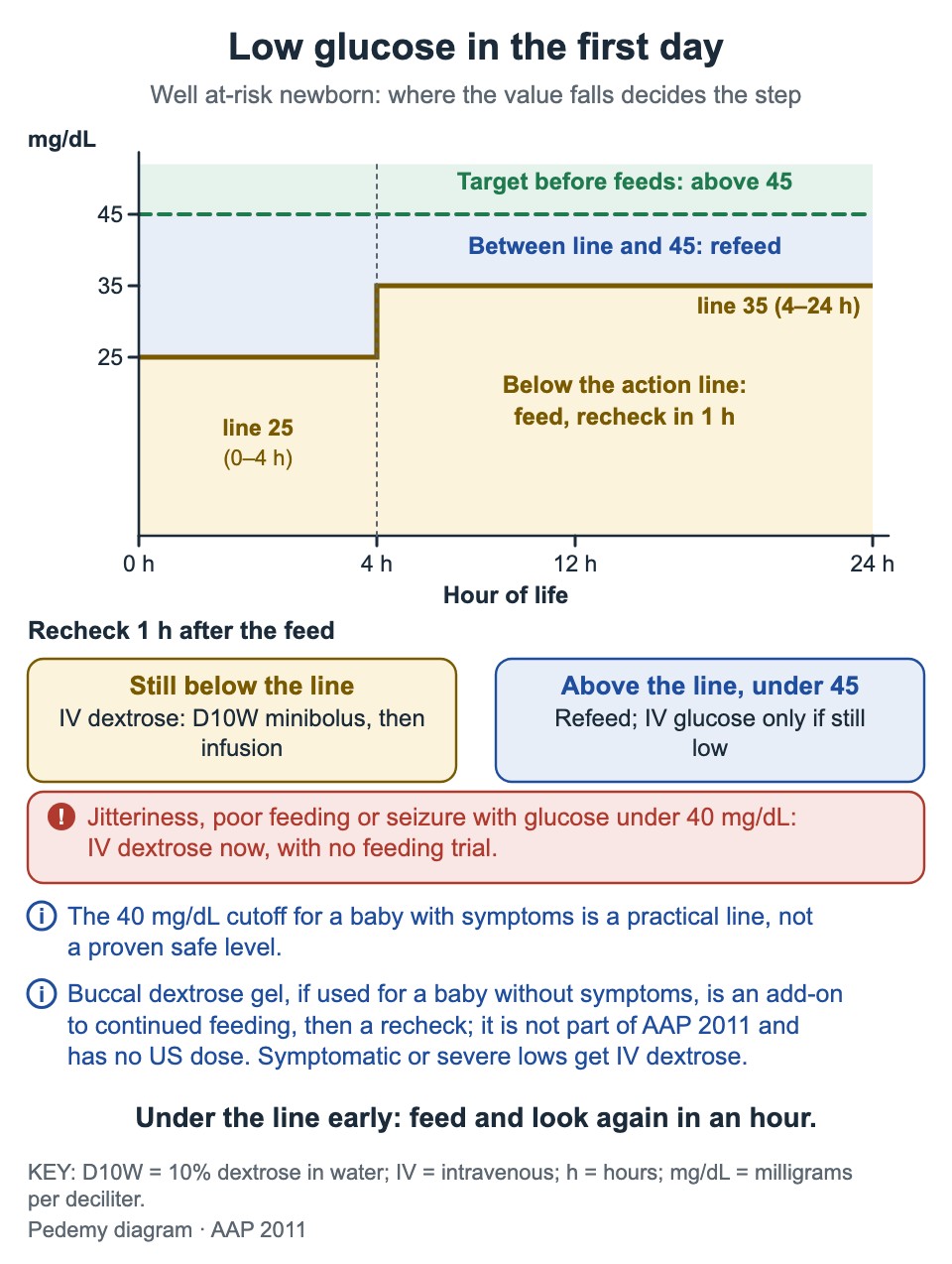
Low glucose in the first day
Routine glucose checks are for four groups: late preterm (34–36 weeks), small for gestational age (SGA), large for gestational age (LGA) and infants of diabetic mothers (IDM). Healthy term babies after a normal birth are not screened, but any newborn with jitteriness, poor feeding, lethargy or seizure gets a glucose at once. Low stores or extra insulin make early lows likely and often silent.
At-risk babies feed by 1 hour of age, with the first check 30 minutes after that feed; later checks are before feeds. IDM and LGA babies are checked for 0–12 hours; late preterm and SGA babies for at least 24 hours, feeding every 2–3 hours with a pre-feed check. Checks continue past 24 hours in any at-risk baby whose glucose is still under 45 mg/dL. The AAP 2011 target before feeds is above 45 mg/dL.
- 40 mg/dL with symptoms is a practical cutoff, not a proven safe level. An asymptomatic baby with the same value may be fed and rechecked first.
- IV glucose is a D10W minibolus of 200 mg/kg = 2 mL/kg (6 mL for 3 kg), since D10W holds 100 mg dextrose per mL. It is always followed at once by an infusion of 5–8 mg/kg/min (D10W 80–100 mL/kg/day), because a bolus alone raises glucose only briefly. The baby needs a nursery or NICU setting that can run a continuous infusion with frequent checks.
- Recheck glucose soon after the bolus, then before feeds until stable. A baby who stays symptomatic is reassessed at the bedside with a glucose right away.
- On IV dextrose the AAP 2011 plasma glucose target is 40–50 mg/dL, with feeds continued.
- Bedside strips can be off by 10–20 mg/dL and are least accurate at low values. Send a lab sample to confirm a very low strip, but treat now: AAP 2011 says treatment should not wait for laboratory confirmation.
- Buccal dextrose gel is massaged into the cheek as an add-on to continued breastfeeding in an asymptomatic baby, followed by a recheck; it does not replace feeding. Symptomatic or severe lows get IV dextrose, not gel. Gel is not part of the AAP 2011 report, and no US dose is given here.
- Glucose not kept above 45 mg/dL after 24 hours on 5–8 mg/kg/min suggests hyperinsulinism: draw an insulin level while glucose is under 40 mg/dL and call endocrinology. Insulin means something only next to a low glucose.
- Checks stop after normal pre-feed values (above 45 mg/dL) through about 3 feed-fast cycles, tied to the risk window rather than a fixed number of readings.
- The Pediatric Endocrine Society (PES) approach adds a supervised safety fast of 6–8 hours before discharge, with glucose staying above 60 mg/dL (above 70 mg/dL if a disorder such as hyperinsulinism is suspected). PES calls for a persistent-hypoglycemia workup when pre-feed glucose cannot stay above 50 mg/dL in the first 48 hours or above 60 mg/dL after.
| Baby | Glucose | Plan (AAP 2011) |
|---|---|---|
| Well, 0–4 hours old | Under 25 mg/dL | Feed, recheck in 1 hour; still under 25 means IV dextrose |
| Well, 4–24 hours old | Under 35 mg/dL | Feed, recheck in 1 hour; still under 35 means IV dextrose |
| Well, recheck above the action line | Above 25 (0–4 h) or 35 mg/dL (4–24 h), under 45 | Refeed; IV glucose only if still low |
| Jitteriness, poor feeding or seizure | Under 40 mg/dL | IV dextrose now, no feeding trial |
Jaundice: bilirubin checks and the phototherapy line
AAP 2022 measures bilirubin once in every newborn of 35 weeks or more, by transcutaneous (TcB) or serum (TSB) bilirubin at 24–48 hours or before an earlier discharge, and checks skin color at least every 12 hours, because visual estimates miss high levels. Jaundice seen before 24 hours is abnormal until a cause such as hemolysis is excluded: get a TcB or TSB as soon as possible and judge it against the hour-specific line.
- TcB is a screen that loses accuracy at higher values. Send a TSB when the TcB is 15 or more, within 3 mg/dL of the phototherapy line, or above it; phototherapy decisions rest on the TSB.
- The phototherapy line needs gestational age, age in hours and any neurotoxicity risk factor. The curves are hour-specific for each gestational week, set lower with a risk factor, and apply only to babies born at 35 weeks or later.
- Neurotoxicity risk factors besides gestation under 38 weeks: isoimmune or other hemolysis (such as G6PD deficiency), sepsis, albumin under 3.0 g/dL, and significant clinical instability in the previous 24 hours.
- Mother's antibody screen positive or unknown: infant DAT (direct Coombs) and blood type as soon as possible. A DAT positive only from anti-D given to the mother as Rh immune globulin, with no anti-D before, is treated as DAT negative.
- A rise of 0.3 mg/dL/h or more in the first 24 hours, or 0.2 mg/dL/h or more after, suggests hemolysis: send a DAT if not done and check the TSB more closely.
- Plot the total bilirubin; never subtract the direct fraction. Direct bilirubin more than 50% of the TSB needs expert consultation.
- Under 24 hours old with bilirubin just below the line: delay discharge and repeat the bilirubin within hours, since it is still rising; phototherapy may also be considered.
Phototherapy, stopping, rebound and escalation of care
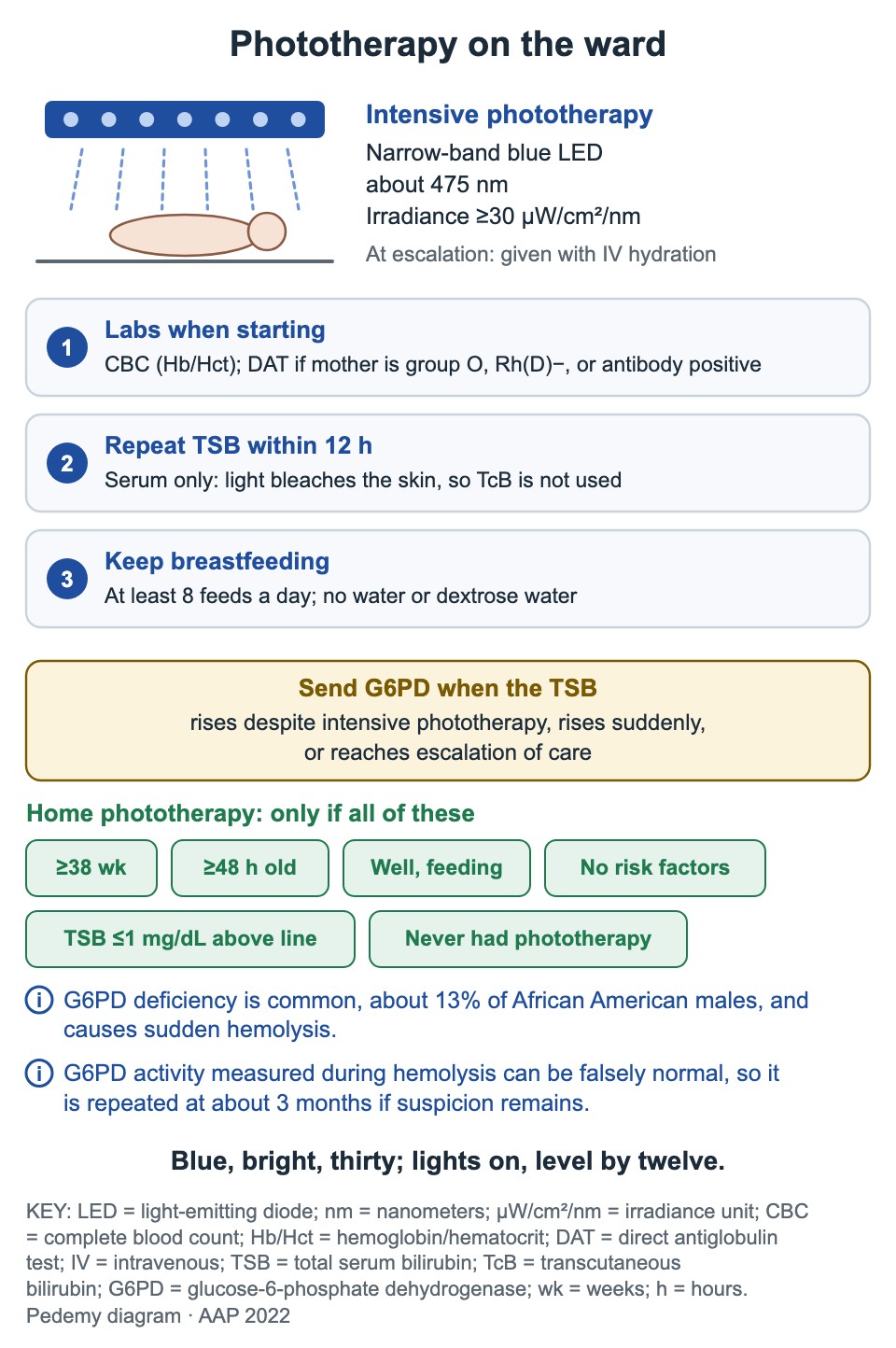
A jaundiced breastfed baby gets support to breastfeed at least 8 times a day, not water or dextrose water. Milk drives stooling and bilirubin loss; water does not, and AAP 2022 advises against these supplements to prevent or treat jaundice.
- Intensive phototherapy uses narrow-band blue LED light near 475 nm at an irradiance of 30 µW/cm²/nm or more.
- Labs when phototherapy is needed: CBC (hemoglobin, hematocrit), and a DAT if the mother is group O, Rh(D) negative or antibody positive.
- Send G6PD when the cause is unknown and the TSB rises despite intensive phototherapy, rises suddenly or needs escalation. G6PD deficiency is common (about 13% of African American males) and causes sudden hemolysis. Activity measured during hemolysis can be falsely normal, so testing is repeated at about 3 months if suspicion remains.
- Repeat the TSB within 12 hours of starting phototherapy; later checks depend on level, trend and age. Use serum TSB during phototherapy and until 24 hours or more after stopping, because light bleaches the skin and the TcB reads falsely low.
- Home phototherapy (an AAP 2022 option): 38 weeks or more, 48 hours or older, well, no risk factors, TSB no more than 1 mg/dL above the line, and no phototherapy before.
- Stop inpatient phototherapy when the TSB is at least 2 mg/dL below the threshold at which it was started. A longer course is an option under 38 weeks, when started before 48 hours, or with hemolytic disease.
- Rebound means the TSB reaches the threshold again within 72–96 hours of stopping. Started before 48 hours, DAT positive or hemolysis: TSB 6–12 hours after stopping and again the next day. No rebound risk factors: one level the day after stopping. Readmitted for phototherapy, or treated at home, without prior inpatient phototherapy: bilirubin or clinical follow-up 1–2 days after stopping.
- Escalation of care is a TSB within 2 mg/dL of the exchange threshold. It is an emergency: intensive phototherapy and IV hydration start together while a neonatologist arranges urgent transfer to a NICU that can do an exchange transfusion.
- STAT labs at escalation: total and direct bilirubin, CBC, albumin, chemistries, type and crossmatch. Check the TSB at least every 2 hours until it is below the escalation threshold.
- Urgent exchange transfusion at or above the exchange threshold, or with signs of acute bilirubin encephalopathy even below the line: hypertonia, arching, retrocollis, opisthotonos, high-pitched cry, apnea or recurrent apnea. An exchange may be deferred if a repeat TSB before starting is below the exchange threshold and there are no encephalopathy signs.
- DAT-positive isoimmune hemolysis with the TSB at the escalation threshold: IVIG 0.5–1 g/kg IV over 2 hours, which may be repeated in 12 hours. Benefit is unclear and AAP lists it only as an option; observational studies link IVIG in newborns with necrotizing enterocolitis.
Feeding, weight and opioid exposure
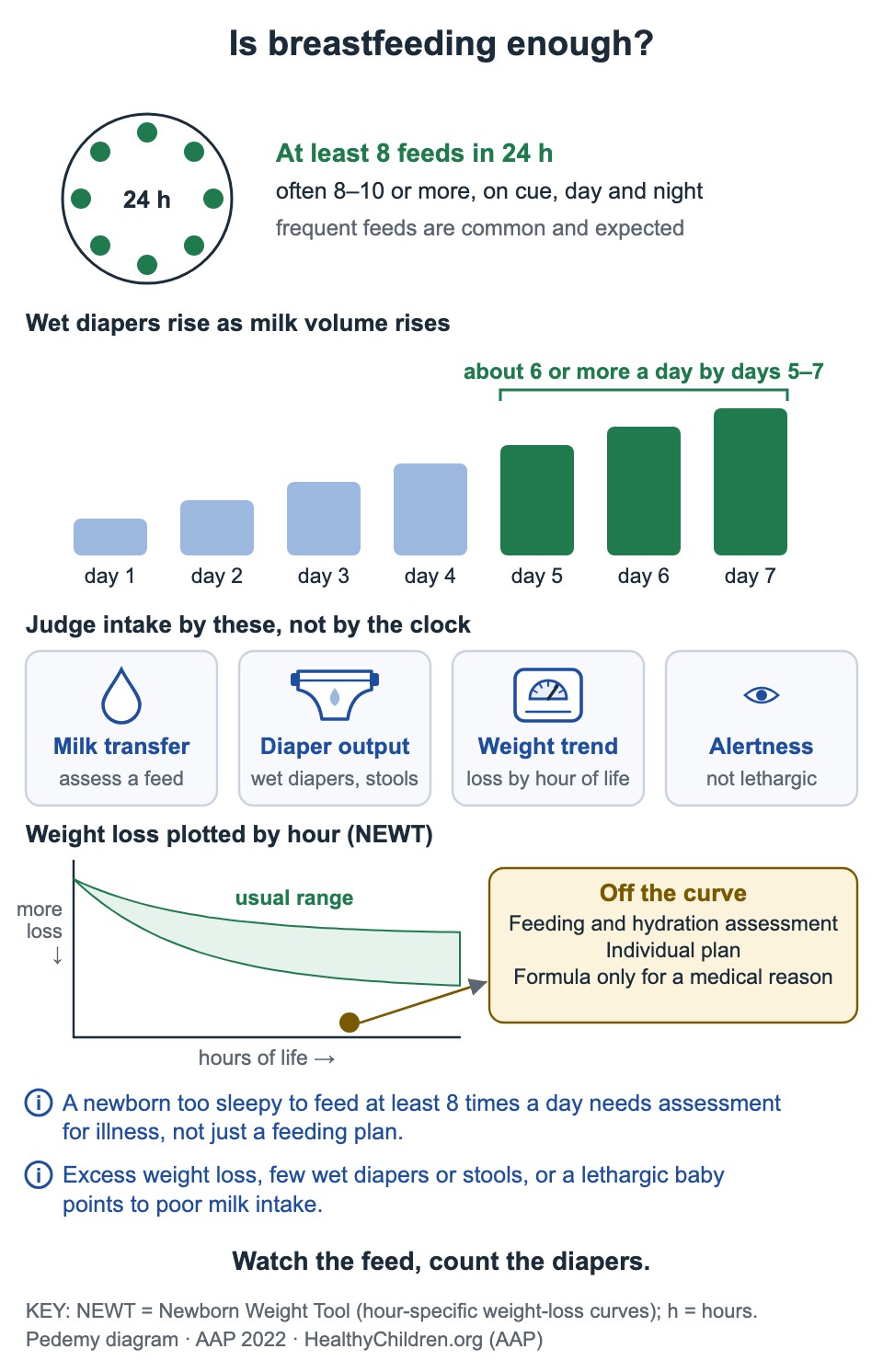
A breastfed newborn feeds at least 8 times in 24 hours, often 8–10 or more, on cue; frequent effective milk removal builds supply and keeps bilirubin and weight loss down. Wet diapers rise day by day, and about 6 or more a day by days 5–7 shows enough milk. A baby too sleepy to feed at least 8 times a day is assessed for illness, not only given a feeding plan.
- Sleepy baby with possible poor milk transfer: assess a full feed and confirm transfer by diaper output and the weight trend, then support breastfeeding.
- Frequent (cluster) feeds are common. Judge adequacy by milk transfer, diaper output, weight trend and alertness; excess weight loss, few wet diapers or stools, or lethargy point to poor intake.
- Weight loss is plotted against hour-specific norms (NEWT), not one fixed percentage. Excess loss for age means a feeding and hydration assessment and an individual plan, not automatic formula; supplement only with a medical reason.
- Medical need for supplement: mother's expressed milk first, then donor milk, with help to pump. Formula is an option when neither is available, decided with the parents.
- Breastfed or partly breastfed babies get vitamin D 400 IU by mouth daily from the first days. Human milk holds little vitamin D, and AAP advises at least 400 IU a day for all infants to prevent rickets.
- Classic galactosemia: no human milk, own or donor, because all of it contains lactose; use lactose-free soy formula. A positive newborn screen for galactosemia means stopping human milk and sending confirmatory testing at once.
- Cleft palate prevents the suction needed to feed: involve a feeding specialist and use a special cleft (assisted-flow) bottle or nipple. An isolated cleft lip with an intact palate often allows direct breastfeeding.
- Opioid exposure, term baby, minimum observation with rooming-in: methadone 5–7 days (withdrawal often starts at 24–72 hours and can appear later); buprenorphine or a sustained-release opioid 4–7 days; short-acting (immediate-release) opioids about 3 days. AAP advises at least 72 hours after any chronic opioid exposure, and evidence for exact periods is limited.
- Early withdrawal signs: non-drug care with the parent rooming in comes first (AAP 2020) and lowers the need for drug treatment. Signs that persist despite it are assessed with the NICU team for opioid treatment.
- Never give naloxone to a sleepy newborn with chronic opioid exposure: it can trigger sudden severe withdrawal or seizures. Breathing support with ventilation is the delivery-room answer.
- A mother stable on prescribed buprenorphine or methadone is encouraged to breastfeed if there is no other contraindication; little drug passes into milk, and breastfeeding lessens withdrawal and shortens the stay. A relapse to illicit drug use within about 30 days is a reason to hold breastfeeding.
Congenital CMV
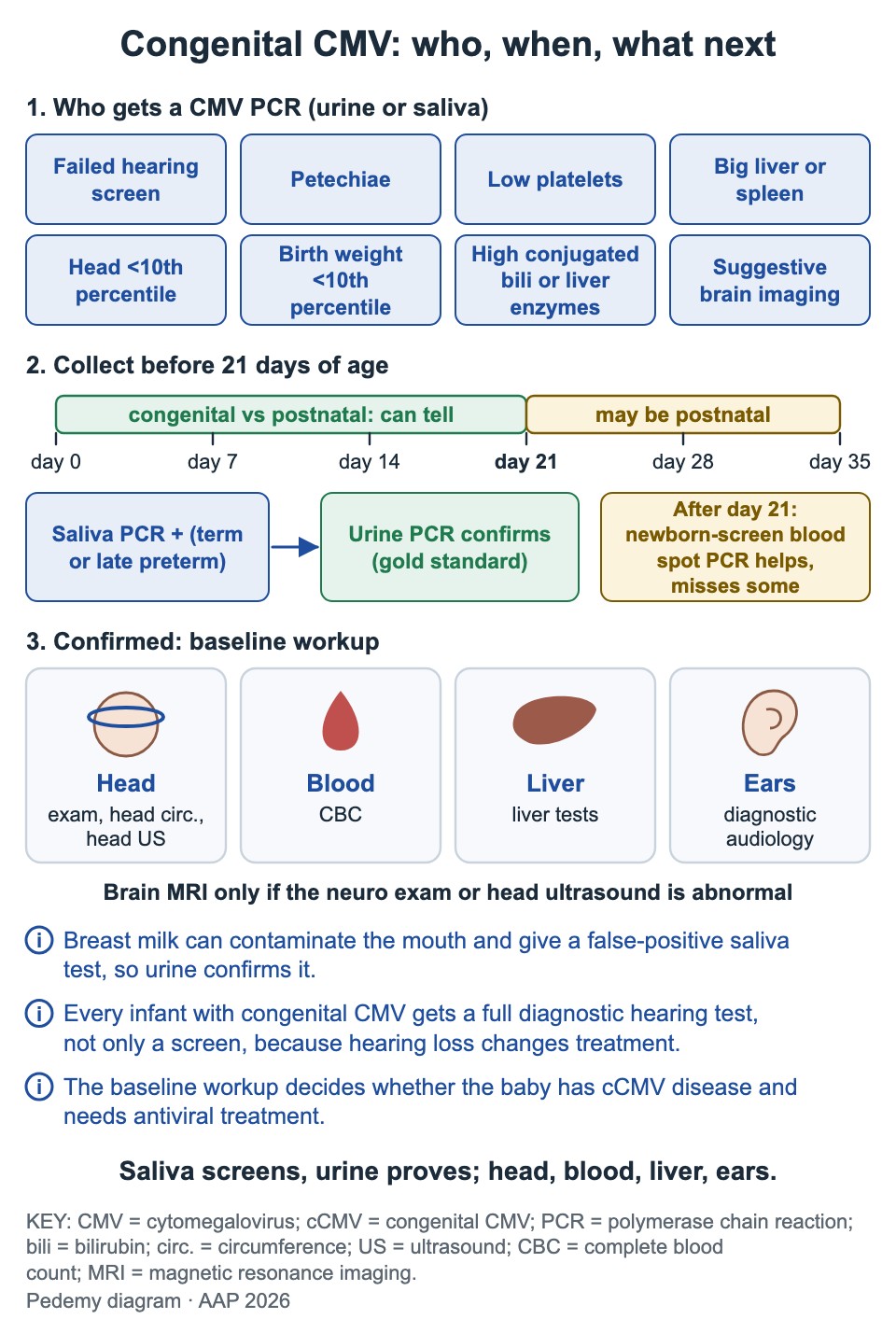
AAP 2026 advises hearing-targeted plus expanded testing. Send CMV PCR on urine or saliva for a failed hearing screen, petechiae, low platelets, a big liver or spleen, birth weight or head circumference below the 10th percentile, high conjugated bilirubin or liver enzymes, suggestive brain imaging, or maternal HIV.
- The sample must be collected before 21 days of age to prove congenital infection; after 3 weeks the virus may come from breast milk or other postnatal exposure. Urine CMV PCR is the gold standard. After 21 days, PCR on the newborn-screen dried blood spot can help but misses some infections.
- Saliva PCR is an accepted first test in term and late-preterm babies, but breast milk can contaminate the mouth and give a false positive: confirm a positive saliva result with urine CMV PCR before 21 days.
- Baseline evaluation of confirmed cCMV: examination with head circumference, CBC, liver tests, head ultrasound and full diagnostic audiology (not only a screen). Brain MRI is added only if the neurologic examination or head ultrasound is abnormal.
- Moderate to severe cCMV disease: oral valganciclovir (Valcyte) 16 mg/kg twice daily (32 mg/kg/day) for 6 months, started within the first 13 weeks of life; it improves hearing and development. Isolated sensorineural hearing loss may be offered the same dose for 6 weeks.
- Valganciclovir suppresses the marrow: ANC weekly for 6 weeks, at week 8, then monthly, and transaminases monthly. Hold the drug if the ANC is repeatedly under 500/mm3 and restart when it is above 750; G-CSF is an alternative.
- cCMV infection with a normal evaluation and normal hearing: no antiviral outside a trial (AAP 2026), since benefit is unproven and the drug is toxic. Follow hearing and development, with repeated hearing tests through early childhood because hearing loss can appear later.
Congenital syphilis, gonorrhea and chlamydia
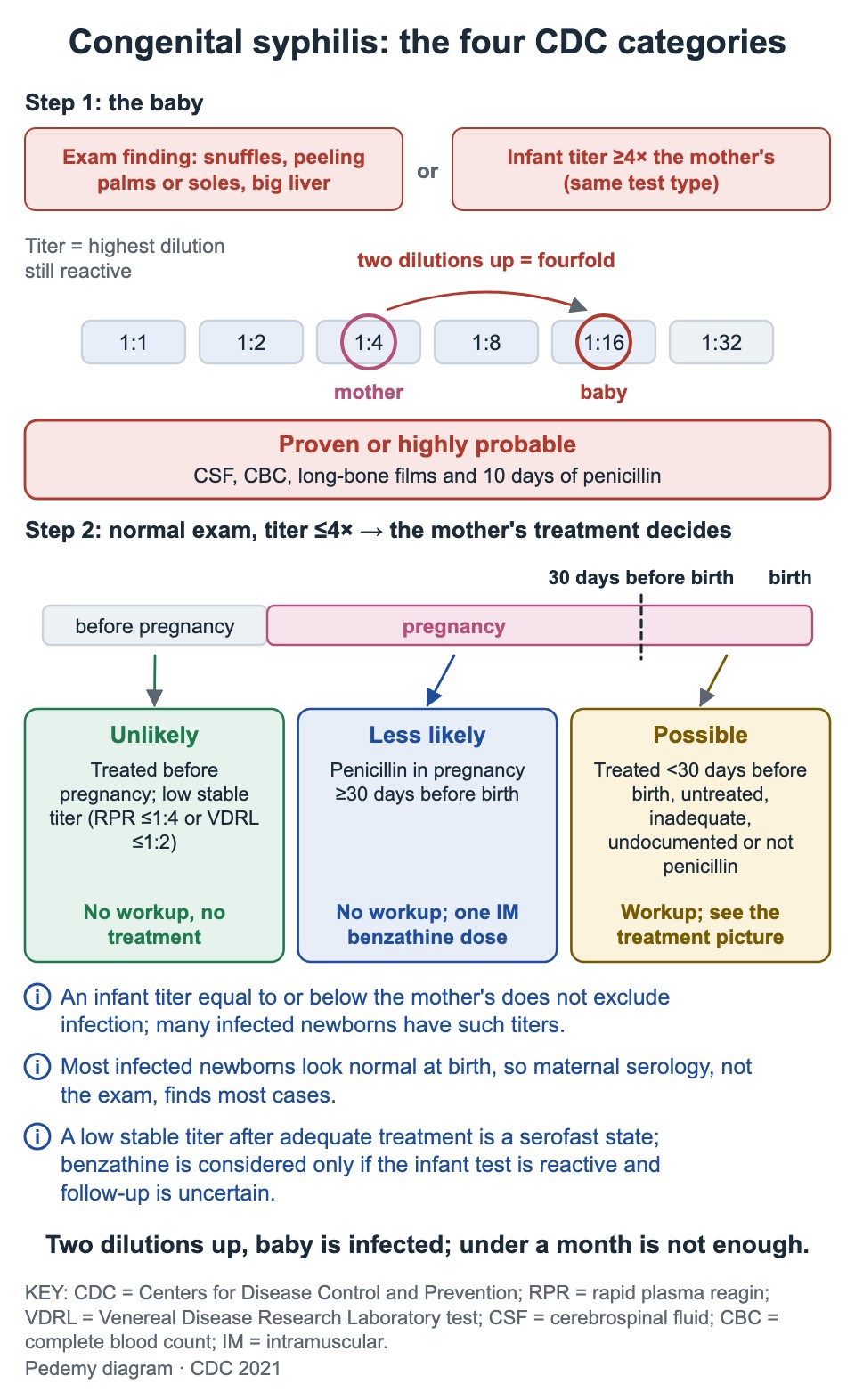
Most infected newborns look normal at birth, so maternal serology, not the examination, finds most cases. CDC sorts the infant of a reactive mother into four categories by the examination, the infant's nontreponemal titer against the mother's, and the mother's treatment.
- Eye, hearing, imaging and liver tests are added to the workup as needed. Fourfold is two doubling dilutions (1:8 to 1:32); the titer is the highest dilution still reactive. An infant titer equal to the mother's does not exclude congenital syphilis.
- Compare infant and maternal titers only on the same test type; RPR and VDRL titers are not interchangeable.
- Draw the infant's own serum, not cord blood, which can be mixed with maternal blood or Wharton jelly.
- Treponemal tests (TP-PA, EIA, CIA) show exposure; nontreponemal tests (RPR, VDRL) show activity. A positive treponemal test in a newborn reflects maternal IgG that crossed the placenta and does not prove infection.
- Aqueous penicillin G 50000 U/kg IV every 12 hours on days 1–7, then every 8 hours, for 10 days total; it reaches the CSF. The CDC alternative is procaine penicillin G 50000 U/kg IM once daily for 10 days. Missing more than 1 day means restarting the full 10-day course; missing one day or less does not.
- Benzathine penicillin G (Bicillin L-A) is 50000 U/kg IM once, used only when the workup is normal or not required. In the possible category the workup can be skipped only if a full 10-day course of parenteral penicillin is given; an abnormal, incomplete or uninterpretable workup means 10 days.
- Follow a reactive infant with a quantitative RPR or VDRL every 2–3 months until nonreactive; CDC advises against treponemal tests to judge response. Passive maternal antibody falls by 3 months and is nonreactive by 6 months, so an untreated infant still reactive at 6 months is evaluated and treated. Treated infants whose titers persist at 6–12 months need repeat CSF evaluation and expert advice.
- A nonreactive newborn of a seroreactive mother is retested at 3 months, since an infant infected late in pregnancy may not have made antibody at birth.
- Eye prophylaxis for every newborn: erythromycin 0.5% ophthalmic ointment to both eyes once (USPSTF), to prevent gonococcal ophthalmia. It is the only eye ointment CDC lists; if unavailable, at-risk infants can get ceftriaxone. It does not reliably prevent chlamydial conjunctivitis and cannot reach the lungs.
- Well newborn of a mother with untreated gonorrhea: ceftriaxone 25–50 mg/kg IV or IM once (max 250 mg), and test exposed sites. Use caution with hyperbilirubinemia, especially in preterm infants. A baby receiving IV calcium gets cefotaxime 100 mg/kg IV or IM once instead.
- Well newborn of a mother with untreated chlamydia: no preventive antibiotics, partly because oral macrolides in the first weeks carry a risk of pyloric stenosis. Teach the family the late signs: conjunctivitis at 5–12 days and afebrile pneumonia with a staccato cough at 1–3 months. Purulent conjunctivitis on days 2–5 points to gonococcus first.
- Chlamydial conjunctivitis: oral erythromycin (base or ethylsuccinate) 50 mg/kg/day divided every 6 hours for 14 days; topical treatment alone is not enough. It works in about 80%, so a second course may be needed. Infants under 6 weeks on erythromycin or azithromycin are watched for pyloric stenosis.
| CDC category | Findings | Plan |
|---|---|---|
| Proven or highly probable | Examination consistent with syphilis (such as snuffles, peeling palms and soles, big liver), or infant titer at least fourfold the mother's | CSF VDRL, cells and protein; CBC with platelets; long-bone films; 10 days of penicillin |
| Possible | Normal examination, titer not above fourfold; mother untreated, inadequately treated, undocumented, treated with a non-penicillin drug, or treated less than 30 days before delivery | Same workup and 10 days of penicillin; one benzathine dose only if the full workup is normal and follow-up is certain |
| Less likely | Normal examination, titer not above fourfold; mother given penicillin 30 days or more before birth | No workup; one IM benzathine dose |
| Unlikely | Normal examination, titer not above fourfold; mother treated before pregnancy with a low stable titer (RPR 1:4 or less, VDRL 1:2 or less) | No workup or treatment; benzathine considered only if the infant test is reactive and follow-up is uncertain |
HIV-exposed newborn
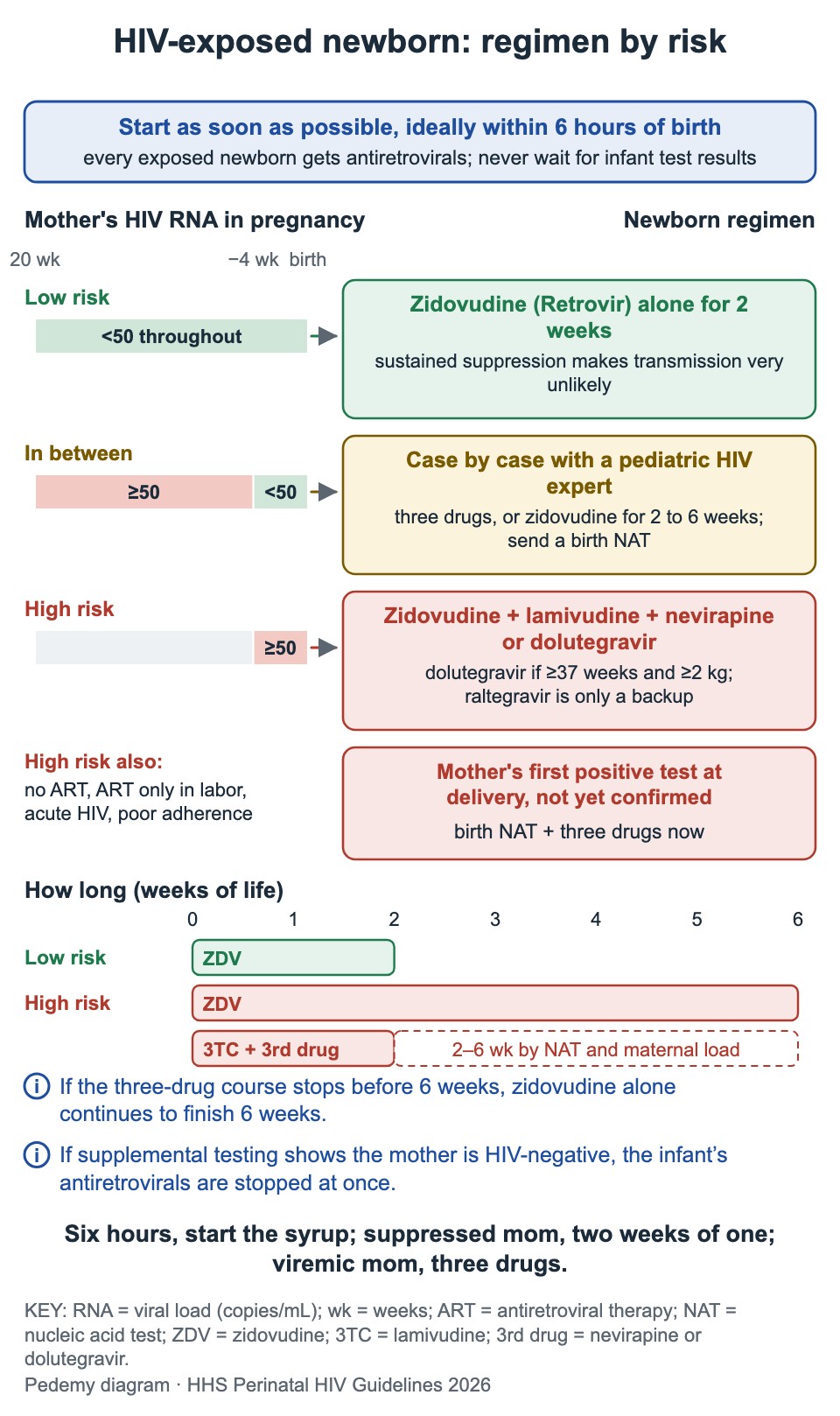
Every HIV-exposed newborn gets antiretrovirals, started as soon as possible and ideally within 6 hours, without waiting for infant test results. HHS chooses the regimen by transmission risk, set mainly by the mother's viral load.
- First maternal HIV test positive at delivery, not yet confirmed: birth HIV NAT and the three-drug regimen now. If supplemental testing shows the mother is HIV-negative, the infant's antiretrovirals stop at once.
- High-risk regimen: dolutegravir is for infants of 37 weeks or more and 2 kg or more; raltegravir is only a backup. Zidovudine continues to 6 weeks; the other two drugs run 2–6 weeks depending on infant NAT and maternal viral load, with expert advice. If the three-drug course stops early, zidovudine alone finishes 6 weeks.
- Zidovudine (Retrovir) 4 mg/kg by mouth twice daily from birth at 35 weeks or more; the IV dose is 75% of the oral dose, and babies born before 35 weeks get a lower gestation-based dose.
- Lamivudine (Epivir), from 32 weeks: 2 mg/kg by mouth twice daily, then 4 mg/kg twice daily from 4 weeks of age.
- Dolutegravir under 2 weeks old: 5 mg dispersible tablet every other day, then 5 mg daily from 2 to 4 weeks of age.
- Under 18 months, diagnose with an HIV nucleic acid test (RNA or DNA PCR): maternal IgG keeps antibody tests positive for many months. Antibody tests become useful at 18 months or later in an infant who is not breastfed.
- Routine NAT for a low-risk formula-fed infant: 14–21 days, 1–2 months and 4–6 months; the birth NAT can be skipped with reliable follow-up. High-risk or breastfed infants also get a birth NAT and a 2–3 month test. Add a NAT 2–6 weeks after presumptive therapy stops, because the drugs can hold virus below detection.
- A positive NAT is repeated on a new sample as soon as possible. Definitive exclusion needs two or more negative virologic tests.
- Mother on ART with HIV RNA under 50 for at least 3 months before delivery who wants to breastfeed: support her choice by shared decision. Transmission falls below 1% but not to zero, and breastfed infants need extra lab monitoring and sometimes longer prophylaxis. Formula or pasteurized donor milk is recommended when the mother is not on ART or not virally suppressed in the third trimester and at delivery.
- Screen HIV-exposed newborns for congenital CMV with urine or saliva PCR, since maternal HIV raises cCMV risk.
- Before discharge on antiretrovirals: drug in hand, caregiver dose teach-back and NAT visits booked. Pneumocystis prophylaxis starts at 4–6 weeks unless HIV infection is presumptively excluded.
| Risk | Mother | Newborn regimen |
|---|---|---|
| Low | HIV RNA under 50 copies/mL from 20 weeks through delivery | Zidovudine (Retrovir) alone for 2 weeks |
| In between | HIV RNA 50 or more earlier in pregnancy, under 50 in the last 4 weeks | Case by case with a pediatric HIV expert: three drugs or zidovudine alone for 2–6 weeks; birth HIV NAT |
| High | HIV RNA 50 or more in the last 4 weeks; no ART, ART only in labor, acute HIV or known poor adherence | Zidovudine + lamivudine + nevirapine or dolutegravir; zidovudine for 6 weeks |
Hepatitis B and C
- A mother with other evidence of hepatitis B (HBV DNA, HBeAg, known chronic infection) is treated as HBsAg-positive. Infants of HBsAg-positive mothers may breastfeed right away.
- Under 2000 g with an HBsAg-positive mother: the birth dose does not count, so 3 more doses follow from 1 month (4 total). The final dose is never given before 24 weeks of age.
- After the series, infants of HBsAg-positive mothers get HBsAg and anti-HBs at 9–12 months; testing before 9 months may pick up HBIG antibody. Anti-HBs below 10 mIU/mL means one more vaccine dose and a retest 1–2 months later.
- Hepatitis C exposure: test the infant with HCV RNA (NAT) at 2–6 months; antibody tests wait until 18 months because maternal antibody may still be present. One undetectable RNA at 2 months or later excludes perinatal infection (CDC 2023), with no further testing unless there is clinical concern.
- Detectable infant HCV RNA needs referral to pediatric hepatitis care; antiviral treatment is approved from age 3. A mother with detectable HCV RNA counts as infected, and a reactive antibody without an RNA result means probable infection.
- A mother with hepatitis C can breastfeed unless her nipples are cracked or bleeding; the virus is not spread by milk itself.
| Mother's HBsAg | Newborn orders |
|---|---|
| Negative; baby medically stable and 2000 g or more | Hepatitis B vaccine, one dose within 24 hours of birth |
| Positive | Hepatitis B vaccine + HBIG within 12 hours, in different limbs; single-antigen vaccine for the birth dose |
| Unknown; baby 2000 g or more | Vaccine within 12 hours and test the mother now; HBIG by day 7 if she is positive |
Herpes simplex (HSV)
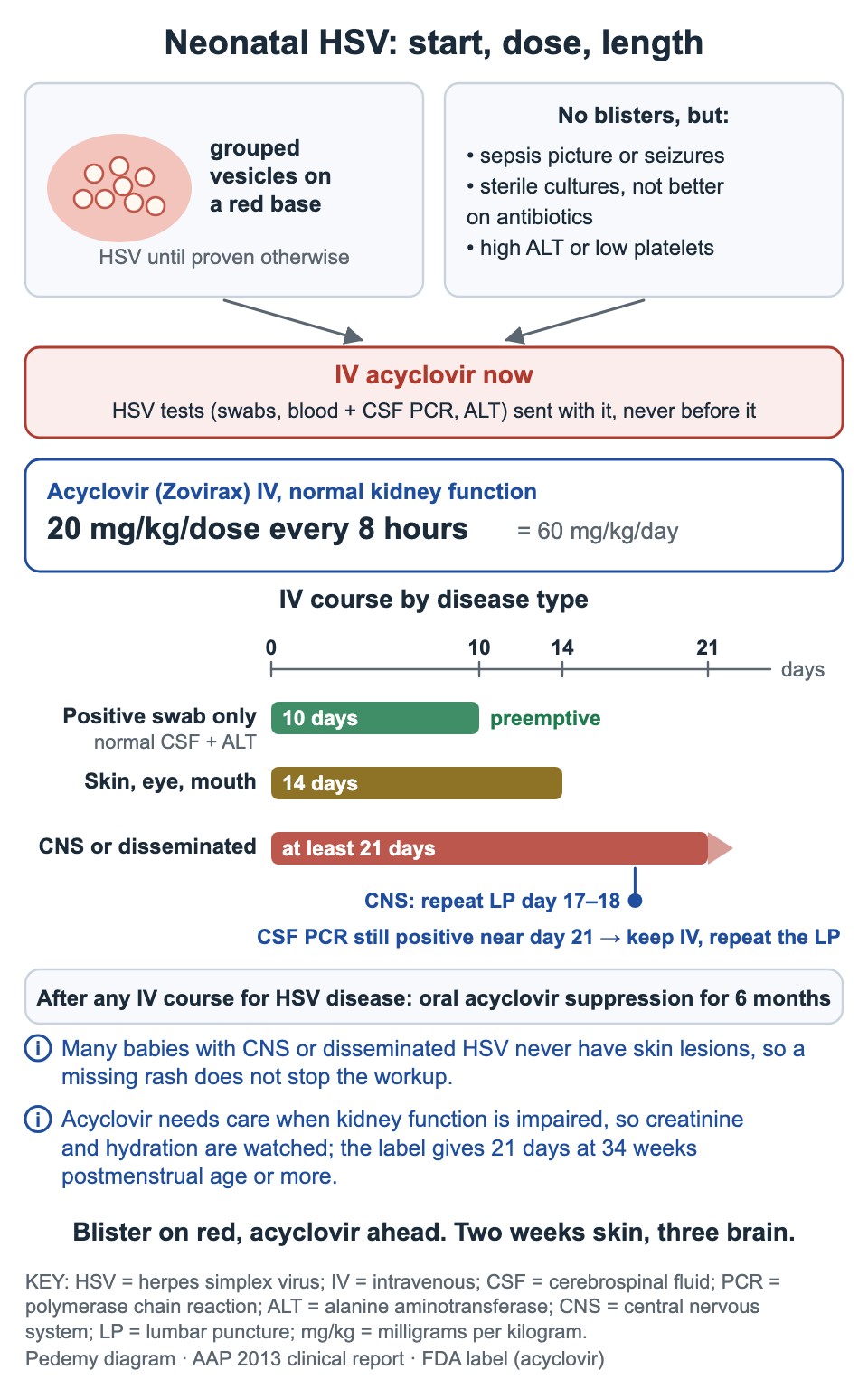
Grouped vesicles on a red base in a newborn are HSV until proven otherwise. Send the evaluation (surface swabs, blood and CSF HSV PCR, ALT) and start IV acyclovir at the same time; testing never delays treatment. Seizures or a sepsis picture get the same plan, and many babies with CNS or disseminated HSV never have skin lesions. A newborn with sterile cultures, high ALT or low platelets who is not improving on antibiotics needs HSV PCR and acyclovir.
- Surface swab sites: conjunctivae, mouth, nasopharynx, rectum and any scalp-electrode site, plus blood HSV PCR (and CSF PCR when indicated).
- Any positive surface or blood test leads to an LP with CSF PCR, ALT and IV acyclovir at once.
- Well exposed baby with negative 24-hour swabs and blood PCR at 48 hours: discharge if follow-up is reliable; otherwise observe until results are negative, up to 96 hours. Families watch for fever, poor feeding, lethargy or vesicles through 6 weeks.
- Acyclovir (Zovirax) 20 mg/kg/dose IV every 8 hours (60 mg/kg/day) with normal kidney function; watch creatinine and hydration, and use caution when kidney function is impaired. The label gives 21 days for infants of 34 weeks postmenstrual age or more.
- Length: infection without disease (positive swab with normal CSF PCR and ALT) 10 days, preemptive; skin-eye-mouth disease 14 days; CNS or disseminated disease at least 21 days. Oral acyclovir suppression for 6 months follows the IV course of disease.
- CNS HSV: repeat the LP near day 17–18 so the result is back by day 21. If the CSF PCR is still positive, continue IV acyclovir and repeat the LP until it is negative.
| Mother's genital HSV at birth | Risk to the baby | Well baby |
|---|---|---|
| Recurrent lesions | About 2% | At about 24 hours: surface swabs and blood HSV PCR; no acyclovir while well |
| First-episode primary | About 57% | 24-hour swabs plus LP with CSF PCR, ALT and empiric IV acyclovir |
| First-episode nonprimary | About 25% | Same as first-episode primary |
Early-onset sepsis and GBS
Early-onset sepsis (EOS) is culture-proven infection within 72 hours of birth; later infection is late-onset sepsis, with different germs and antibiotics. For babies of 35 weeks or more, AAP 2018 accepts three approaches: categorical risk factors, the neonatal EOS risk calculator, or serial clinical examinations. Babies of 34 6/7 weeks or less are assessed with the AAP preterm approach, not the calculator.
- Calculator inputs: gestation, highest intrapartum temperature, hours of ruptured membranes, GBS status, antibiotic type and timing, then the infant's status (well, equivocal or ill) over the first 6–12 hours.
- Calculator risk 3 or more per 1000 births: blood culture and empiric antibiotics. Risk 1 or more but under 3 per 1000 in a well baby: blood culture and enhanced observation.
- Re-examine and update the risk with each set of vital signs over the first 12 hours; persistent tachycardia, tachypnea, temperature instability or mild distress raise it. Abnormal vital signs, oxygen or CPAP need, ventilation or blood-pressure support mean clinical illness, which calls for cultures and antibiotics whatever the calculated risk. Clinical judgment separates transitional instability right after birth from true illness.
- Categorical approach: maternal intra-amniotic infection (maternal temperature of 38.0 °C or more as its surrogate) means blood culture and empiric ampicillin and gentamicin even in a well baby. Only ill-appearing babies and babies of mothers with intra-amniotic infection get empiric antibiotics.
- GBS-positive mother with inadequate IAP and no other risk factor: observe in hospital at least 48 hours, no labs. With ROM over 18 hours or birth before 37 weeks as well: blood culture and observation.
- Adequate GBS prophylaxis is penicillin, ampicillin or cefazolin at least 4 hours before birth. Clindamycin, vancomycin, or any drug for less than 4 hours, is inadequate.
- Isolated low glucose in a well baby is not an EOS risk factor (AAP 2019). Low glucose in a baby who also looks ill, or has unstable temperature or breathing, still prompts a sepsis evaluation.
- Empiric regimen: IV ampicillin + gentamicin, covering GBS (about 40–45% of EOS), E. coli and Listeria. About 7% of E. coli EOS resists both, so ill babies may need broader gram-negative cover. Gentamicin carries a boxed warning for nephrotoxicity and ototoxicity.
- Draw the blood culture before antibiotics unless it delays care of an unstable baby. Surface cultures and gastric aspirates are not sent, and urine culture is not part of the evaluation in the first 72 hours.
- A positive blood culture means a lumbar puncture, even if the baby looked well. A critically ill baby gets antibiotics now and the LP once stable; a stable baby has the LP first only if it causes no delay.
- Stop antibiotics at 36–48 hours if the culture is sterile, there is no focal infection and the baby is well; most true positives grow by 36 hours. A positive culture, meningitis or ongoing illness needs a full course instead. Serial CRP or procalcitonin should not set the length, and a normal CBC, I:T ratio, CRP or procalcitonin cannot rule EOS in or out.
- Unneeded antibiotics change the gut microbiome, drive resistance, separate mother and baby and disrupt breastfeeding, which is why AAP uses risk-based approaches.
Mother with influenza, tuberculosis, chickenpox or rubella
- Mother with influenza, temporarily separated from her baby: a healthy caregiver feeds her expressed milk, which is safe even when she takes antivirals and may protect the baby. If she rooms in, she wears a mask and cleans her hands for feeds, with distance between feeds.
- Newborn of a mother with influenza who develops fever or cough: droplet precautions, a flu test and oseltamivir as soon as possible. Precautions continue 7 days from onset or 24 hours after symptoms end, whichever is longer.
- Oseltamivir (Tamiflu) 3 mg/kg by mouth twice daily for 5 days is the FDA-labelled treatment dose from 2 weeks to under 1 year; use under 2 weeks is off-label.
- Mother's chickenpox began 5 days before to 2 days after delivery: VariZIG IM as soon as possible, within 10 days; 62.5 units if 2.0 kg or less, 125 units if 2.1–10 kg.
- Mother with latent TB infection only: no separation; room in and breastfeed while she is assessed for treatment.
- Possible active maternal pulmonary TB at delivery: separate, airborne precautions, call infectious diseases and evaluate the infant for disease and preventive treatment. Expressed milk can usually be given unless the mother has TB mastitis.
- Cataracts, a failed hearing screen and a PDA suggest congenital rubella syndrome. It is nationally notifiable, and infants shed virus for up to a year, so they can infect susceptible caregivers.
Screens, discharge orders and teaching
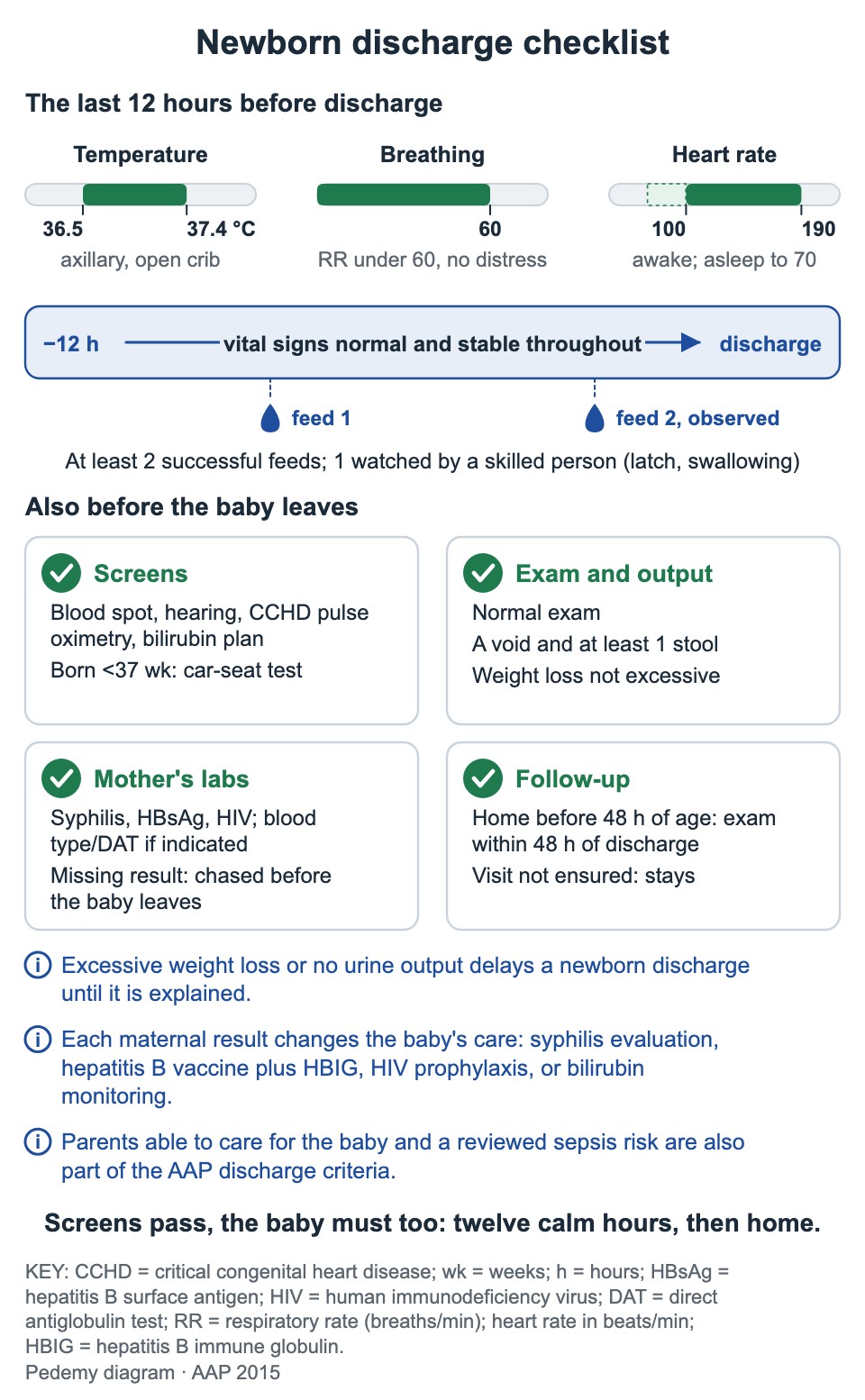
Before routine discharge the blood-spot, hearing and CCHD pulse-oximetry screens are done or arranged and a bilirubin plan is set; hearing loss and CCHD are core conditions of the US Recommended Uniform Screening Panel. Screens alone are not enough: AAP criteria also need a normal examination, stable vital signs for the 12 hours before discharge, at least 2 successful feeds with one observed by a skilled person (poor feeding is a common cause of readmission for jaundice and dehydration), a void and at least one stool, parents able to care for the baby, and follow-up. Sepsis risk and maternal results (syphilis, HBsAg, HIV, and blood type or DAT if indicated) are reviewed, and a missing result is chased before the baby leaves.
Follow-up bilirubin after discharge is set by the gap between the last bilirubin and the hour-specific phototherapy line (AAP 2022). The table applies only to babies at least 12 hours old who have had no phototherapy; a baby discharged before 12 hours gets a bilirubin at 24–48 hours of age.
- Normal vital signs (AAP): axillary temperature 36.5–37.4 °C in an open crib, respiratory rate under 60 without distress, awake heart rate 100–190, and a sleeping rate down to 70 in a well baby. Abnormal values in the last 12 hours, excessive weight loss or no urine output delay discharge until explained.
- Discharged before 48 hours: first follow-up within 48 hours of discharge, since jaundice, feeding problems and some heart lesions show on days 3 to 5. If that visit cannot be arranged, the baby stays.
- CCHD screen: right hand (preductal) and one foot (postductal) at 24 hours or more, or as late as possible if leaving earlier. Pass is 95% or more at both sites with a gap of 3 points or less. Hand or foot 90–94%, or a gap over 3, with none under 90%: repeat once in 1 hour; a second non-pass is a fail. Any reading below 90% is a fail now: evaluate for heart, lung and infection causes and get an echocardiogram if nothing else explains it.
- A passed CCHD screen does not exclude coarctation: weak femoral pulses mean an echocardiogram, and four-limb pulses and blood pressures are part of the examination. Babies born at home need the same CCHD, hearing and blood-spot screens by the first visit.
- Hearing (JCIH): at most two inpatient screens, then one outpatient rescreen of both ears before 1 month, even if one ear failed. A failed rescreen goes to a pediatric audiologist, with diagnostic audiology by 3 months. OAE or AABR is acceptable in the well-baby nursery, including a pass by OAE after a failed AABR; NICU babies are screened with AABR so auditory neuropathy is not missed. An ear with canal atresia is not screened but referred for diagnostic audiology.
- A failed hearing screen means congenital CMV PCR (urine, or saliva confirmed by urine), collected within the first 21 days.
- Blood spot after 24 hours of milk feeding, with panel and timing set by the state program; a sample taken earlier is always followed by a repeat.
- Car-seat observation for babies born before 37 weeks (sometimes low-birth-weight or hypotonic term babies too): at least 90 to 120 minutes or the trip length, whichever is longer, watching for apnea, bradycardia and desaturation. Significant events are reviewed by the treating physician and need an intervention, such as a car bed, oxygen or further evaluation, not repeated retests.
- The car seat rides rear-facing in the back seat; AAP 2018 keeps children rear-facing as long as the seat's height and weight limits allow.
- Vitamin K: phytonadione (vitamin K1) 1 mg IM once within 6 hours of birth above 1500 g; 0.3–0.5 mg/kg IM once at 1500 g or less. The label carries a boxed warning for severe hypersensitivity. If parents decline, explain the late, possibly intracranial bleeding risk and document the refusal; non-IM routes protect less reliably.
- RSV: nirsevimab (Beyfortus) 50 mg IM under 5 kg, 100 mg at 5 kg or more, one dose for the first season. Babies born October–March get it within the first week, ideally in the birth hospital; babies born April–September get it in October or November. Clesrovimab (Enflonsia) is a single 105 mg IM dose for all weights.
- Nirsevimab is not needed if the mother got the RSV vaccine at least 14 days before birth, unless she is immunocompromised or has HIV, or the infant had cardiopulmonary bypass. A vaccine less than 14 days before delivery does not protect the baby.
- Safe sleep (AAP 2022): on the back on a firm, flat, non-inclined surface with no soft bedding; share the room, not the bed. Add a pacifier, no overheating, no exposure to nicotine, alcohol, marijuana, opioids or illicit drugs, human milk and vaccines. Home cardiorespiratory monitors are not a substitute. About 3500 US infants die each year from sleep-related causes.
- Red reflex absent, asymmetric or white: prompt pediatric ophthalmology referral for possible cataract, retinoblastoma or glaucoma. Both eyes are checked together in a dim room before discharge and at every well-baby visit.
- Handoff at every shift change: pending results, timed tasks, if-then plans and the responsible clinician, with direct verbal escalation for an unstable baby.
| Gap below the phototherapy line | Plan |
|---|---|
| 0.1–1.9 mg/dL (24 hours or older) | TSB in 4–24 hours; consider delaying discharge and phototherapy, home phototherapy if all criteria are met, or close follow-up |
| 2.0–3.4 mg/dL (24 hours or older) | TSB or TcB in 4–24 hours |
| 3.5–5.4 mg/dL | Bilirubin recheck in 1–2 days |
| 5.5–6.9 mg/dL | Follow-up within 2 days |
| 7 mg/dL or more, discharged before 72 hours | Follow-up within 3 days; repeat bilirubin by clinical judgment |
Delivery-room station and circumcision
Check the warmer station before every birth, not only when trouble is expected: heat, suction, oxygen with a blender, a tested PPV device and the right-size masks, so ventilation can start within the first minute. Keep a self-inflating bag as backup in case the T-piece or gas source fails; it refills by itself without compressed gas.
- Suction is only for a visibly blocked airway. Vigorous babies, clear or meconium-stained, are not suctioned routinely, because suction can injure the airway and slow the heart.
- T-piece starting PIP about 20–30 cm H2O, adjusted to chest rise and heart rate. If the chest does not rise, correct the mask and airway first, then raise PIP step by step. A rising heart rate is the best sign ventilation works.
- Starting FiO2 for babies of 35 weeks or more is 21% (room air), titrated by preductal SpO2 on the right hand or wrist; babies of 32 to 35 weeks start at 21–30%.
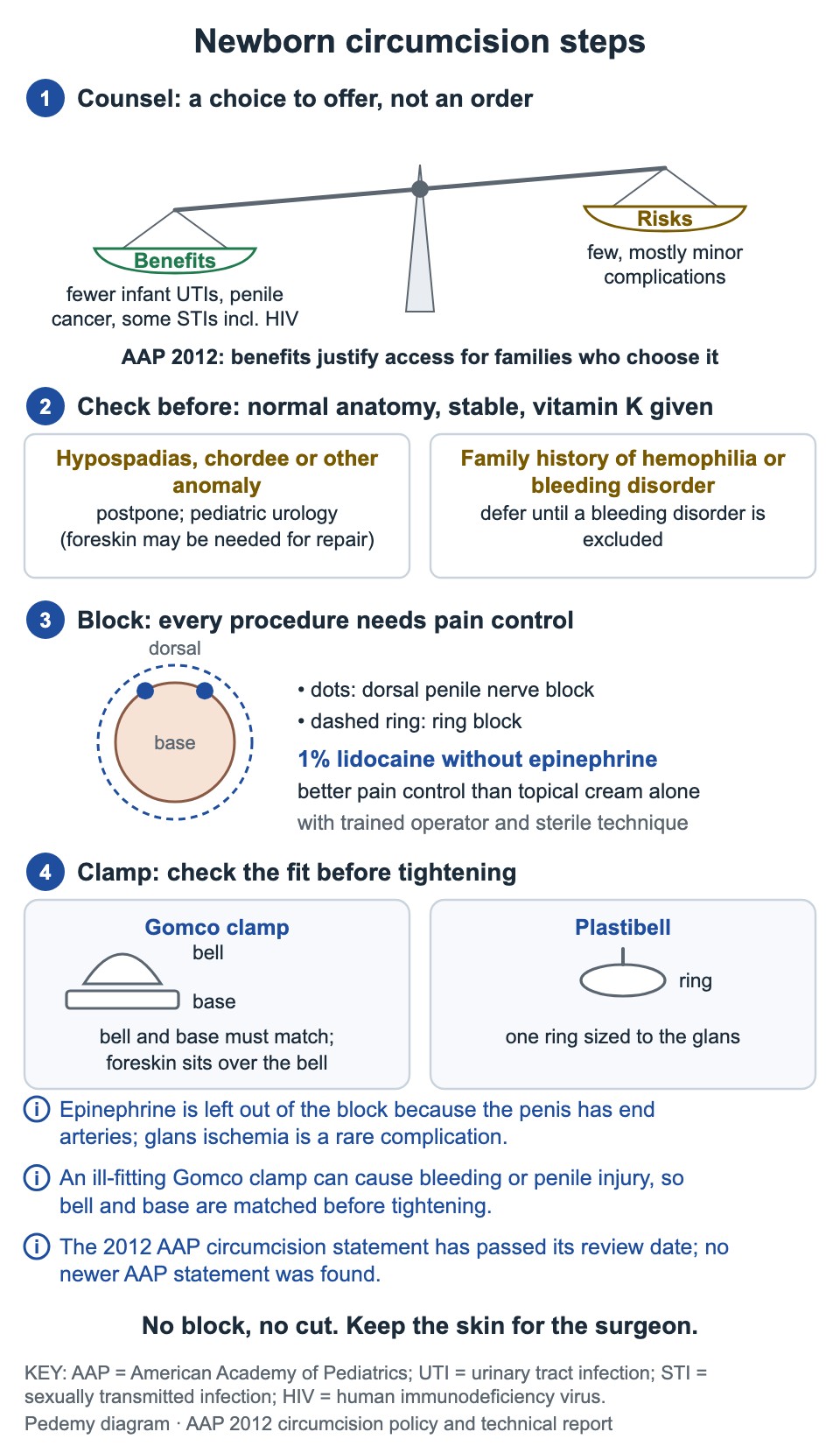
- Circumcision: the AAP 2012 statement found lower rates of infant UTI, penile cancer and some STIs, including HIV, with few, mostly minor complications. Benefits outweigh risks and justify access for families who choose it, but it is not a routine recommendation for every boy. The statement has passed its review date and no newer AAP statement was found.
- Every circumcision needs a trained operator, sterile technique and pain control; first confirm a stable baby, normal penile anatomy and vitamin K given. Dorsal penile nerve block or ring block with 1% lidocaine without epinephrine gives better pain control than topical cream alone; glans ischemia is a rare complication.
- Hypospadias, chordee or another penile anomaly: postpone and refer to pediatric urology, since the foreskin may be needed for repair. A family history of hemophilia or another bleeding disorder defers the procedure until a bleeding disorder is excluded.
- Gomco clamp: check that the bell and base fit together and the foreskin sits correctly over the bell before tightening. A Plastibell instead uses one ring sized to the glans.
- After the procedure: no excessive bleeding for at least 2 hours before same-day discharge. Ongoing bleeding needs prompt in-person evaluation. Moist yellow granulation tissue without bleeding or fever is normal healing, not pus.
Examination findings to follow up
- Positive Ortolani (unstable or dislocated hip): refer promptly to pediatric orthopedics without waiting for a routine ultrasound. A positive Barlow alone usually stabilizes: repeat hip examinations at follow-up visits. A soft click with a stable hip is a different finding.
- Breech in the third trimester with a normal hip examination: hip ultrasound at about 6 weeks, or an X-ray before 6 months. Female sex, breech position and family history are the main risk factors.
- Decreased arm movement after shoulder dystocia: tell brachial plexus palsy (true weakness; waiter's tip position in Erb palsy) from a clavicle or humerus fracture (pain-limited movement; crepitus over the clavicle). Both can occur together, and both give an asymmetric Moro reflex.
- High heel-stick hematocrit: confirm polycythemia with a venous hematocrit above 65%. A symptomatic baby with a confirmed high value may need a partial exchange. Infants of diabetic mothers and growth-restricted babies are at higher risk.
- Very low platelets or bleeding: urgent evaluation for the cause and transfusion by severity, given the risk of intracranial hemorrhage; mild thrombocytopenia in a well baby is rechecked. Hold pressure longer than usual at every needle site and avoid deep punctures. A very low count in a well baby whose mother has normal platelets suggests neonatal alloimmune thrombocytopenia.
- Mother with ITP, lupus or low platelets: check the baby's platelet count and plan a repeat if it is low, since it may keep falling for several days.
- Maternal Graves disease: her history, antithyroid drugs and TRAb result are passed to the newborn team (American Thyroid Association), even after thyroidectomy or radioiodine. Recheck thyroid tests after the first days per the endocrine plan; the blood-spot screen looks for hypothyroidism and does not exclude hyperthyroidism. Teach the signs that need a same-day visit: fast heart rate, irritability, sweating, poor weight gain. Blocking antibodies can instead cause transient hypothyroidism.
- Mother anti-Ro/SSA or anti-La/SSB positive: ECG for heart block, and check for the neonatal lupus rash (around the eyes in the first weeks, fading by about 6 months) and low blood counts.
- Sustained slow heart rate or possible heart block: check perfusion and oxygen, get an ECG and escalate; resuscitate an unstable baby before tests. Complete heart block with a normal heart structure is most often from maternal anti-Ro antibodies.
- QTc above 500 ms: urgent pediatric cardiology review and electrolytes, since low calcium, potassium or magnesium lengthen the QTc.
- Murmur that is diastolic, holosystolic, continuous or grade 3 or more: echocardiogram and/or cardiology evaluation. A soft systolic ejection murmur in a well baby with normal pulses is rechecked; many fade as the ductus closes.
- Prenatal urinary tract dilation: mild, in a stable baby, means a first renal ultrasound after the first days, not on day 1; bilateral or severe means a scan before discharge; suspected posterior urethral valves (bilateral hydronephrosis and a thick bladder wall in a boy) or oligohydramnios means an urgent scan. Mild unilateral dilation is followed with an outpatient ultrasound.
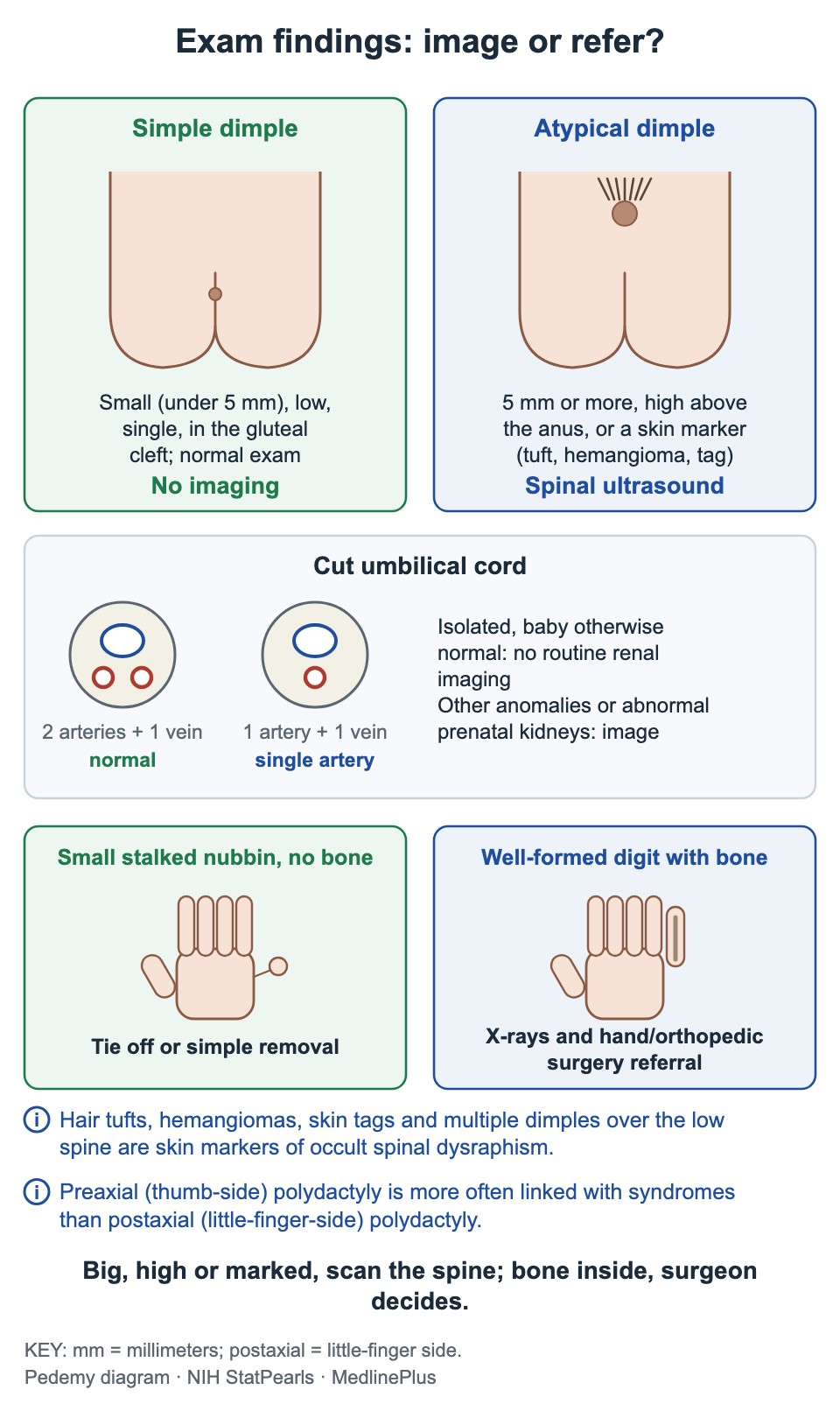
- Sacral dimple 5 mm or more, high above the anus, or with a skin marker (hair tuft, hemangioma, skin tag, multiple dimples): spinal ultrasound. A small, low, single dimple in the gluteal cleft with a normal examination needs no imaging.
- Single umbilical artery (one vein and one artery on the cut cord) in an otherwise normal baby: no routine renal imaging; image if there are other anomalies or abnormal prenatal kidney findings.
- Well-formed extra digit with a bony attachment: X-rays and hand or orthopedic surgery referral. A small stalked postaxial nubbin without bone can be tied off or removed simply. Preaxial (thumb-side) polydactyly is more often linked with syndromes.
Common questions
Which newborns need glucose checks in the nursery?
Late preterm babies (34–36 weeks), SGA and LGA babies, and infants of diabetic mothers. They feed by 1 hour of age and have the first check 30 minutes after that feed. Any newborn with jitteriness, poor feeding, lethargy or seizure is checked at once.
When is a serum bilirubin needed instead of a transcutaneous one?
When the TcB is 15 or more, within 3 mg/dL of the phototherapy line, or above it, and during and for 24 hours after phototherapy, because light bleaches the skin. Phototherapy decisions rest on the serum TSB.
When can empiric antibiotics for possible early-onset sepsis stop?
At 36–48 hours if the blood culture is sterile, there is no focal infection and the baby is well. Serial CRP or procalcitonin should not set the length.
What does a well newborn of a mother with untreated gonorrhea need?
Ceftriaxone 25–50 mg/kg IV or IM once, max 250 mg, with testing of exposed sites. A baby receiving IV calcium gets cefotaxime 100 mg/kg once instead.
How long should an opioid-exposed newborn be observed?
At least 72 hours after any chronic opioid exposure: about 3 days for short-acting opioids, 4–7 days for buprenorphine or sustained-release opioids, and 5–7 days for methadone, with the parent rooming in.
What makes a pass on the CCHD pulse-oximetry screen?
Readings of 95% or more in both the right hand and a foot, with a gap of 3 points or less, at 24 hours or later. A borderline result is repeated once in 1 hour, and any reading below 90% is a fail.
Study this topic
Sources
- AAP Clinical Practice Guideline Revision: Management of Hyperbilirubinemia in the Newborn Infant 35 or More Weeks of Gestation (Pediatrics 2022)
- AAP clinical report: Postnatal Glucose Homeostasis in Late-Preterm and Term Infants (Pediatrics 2011)
- AAP clinical report: Management of Neonates Born at 35 0/7 Weeks or More With Suspected or Proven Early-Onset Bacterial Sepsis (Pediatrics 2018)
- CDC STI Treatment Guidelines: Congenital Syphilis
- AAP clinical report: Guidance on Management of Asymptomatic Neonates Born to Women With Active Genital Herpes Lesions (Pediatrics 2013)
- AAP clinical report: Hospital Stay for Healthy Term Newborn Infants (Pediatrics 2015)
Written for Pedemy in our own words from the sources above; checked November 2026. For education only, not medical advice; check doses and local protocols before treating a patient. Pedemy is independent and not affiliated with or endorsed by the organizations cited.